Industrial Licence in the UAE: Setting Up Manufacturing
 Ali Jasim
An industrial licence in the UAE covers manufacturing, production and processing, turning raw materials or components into finished goods. It requires a genuine industrial facility, whether a factory, workshop or production line, and typically brings extra approvals beyond a standard trade licence: environmental clearance, civil defence and safety sign-off, and sometimes municipality or free zone authority inspection.
Costs depend heavily on the facility itself, which is usually the largest line item, alongside the licence fee, staffing and visas. It takes longer to set up than a trading or service licence because of these physical and regulatory requirements.
Manufacturing is a different proposition from trading or consulting, and the UAE licenses it differently.
An industrial licence is built around the reality that you are producing something, not just moving or advising on it, which brings genuine facility requirements, safety approvals and a longer runway to get operating.
This guide covers what the licence allows, the approvals involved, and what a realistic setup looks like.
What an Industrial Licence Covers
An industrial licence authorises manufacturing, assembly, processing and production activities, turning raw materials or components into a finished or semi-finished product. This spans everything from food processing and packaging to furniture manufacturing, garment production, metal fabrication and light assembly of electronics.
It is distinct from a commercial licence, which covers trading finished goods you did not make, and from a professional licence, which covers services rather than production.

The activity description on an industrial licence is usually more detailed than on a trading or service licence, since the authority needs to understand the actual production process, not just the finished product category, in order to assess the safety, environmental and facility approvals that come with it.
Two businesses making the same end product through different processes, one assembling imported components, the other manufacturing from raw material, can sit under different licence conditions as a result.
Who Needs an Industrial Licence
Any business with a genuine production process needs this licence type: factories, assembly lines, food and beverage manufacturers, textile and garment producers, printing and packaging operations, and workshops that fabricate or process materials.
A business that simply imports finished goods and resells them, even if it rebrands or repackages lightly, is usually still commercial rather than industrial.
The line is whether a real transformation of materials happens on your premises.
Industrial vs Commercial Licence
The distinction matters because the requirements differ sharply. A commercial licence can often run from a small office or flexi-desk.
An industrial licence needs a facility built and equipped for the actual production process, subject to inspection, and typically cannot be issued against a shared workspace. See trade licence types explained for how all four main licence categories compare side by side.
| Commercial licence | Industrial licence | |
|---|---|---|
| Premises | Office, shop or flexi-desk | Dedicated industrial facility |
| Core approvals | Activity dependent | Environmental, safety, civil defence |
| Setup timeline | Days to a few weeks | Several weeks to months |
| Inspection before licensing | Rare | Standard |
Choosing a Location: Industrial Zones and Free Zones
Dubai and the wider UAE have dedicated industrial areas built for exactly this kind of business, with infrastructure for power load, water, waste handling and heavy vehicle access that a standard commercial district does not offer.
Several free zones also run dedicated industrial or logistics parks with pre-built warehouse and light-industrial units, which can be faster to occupy than negotiating a bespoke mainland facility from scratch.
The right choice depends on your production scale, whether you export internationally, and how close you need to be to mainland customers versus port and logistics access.
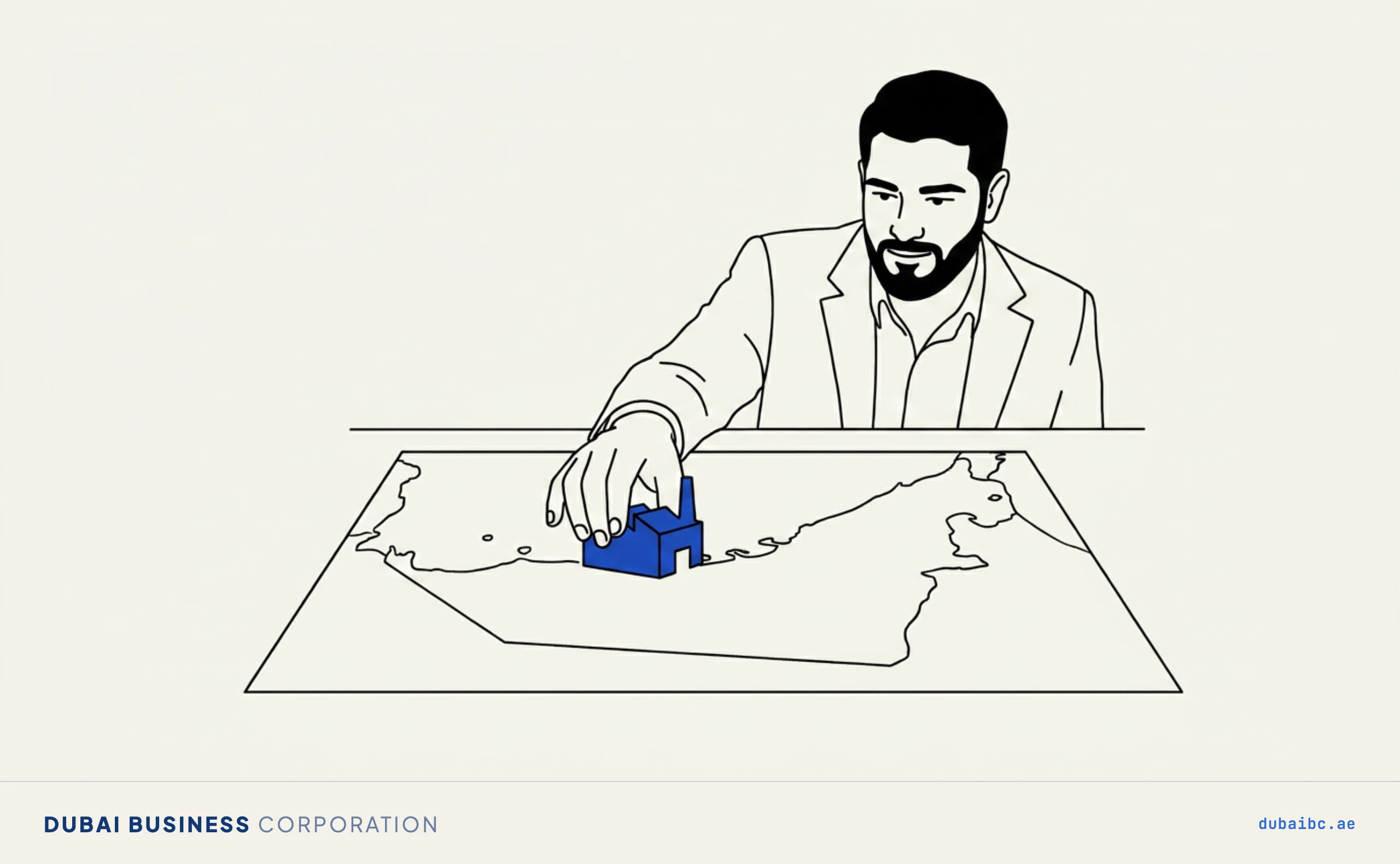
Power capacity is worth checking before signing any facility agreement, since heavier machinery can draw more load than a standard unit is wired for, and upgrading electrical supply after move-in is far slower and costlier than confirming it upfront.
Similarly, if your process generates meaningful waste or wastewater, confirm the facility has an approved disposal route rather than assuming one exists, since this is one of the first things an environmental inspection will check.
Our free zone and mainland pages cover the ownership and market-access trade-offs generally; for manufacturing specifically, proximity to ports, labour housing, and utility capacity often matter as much as the jurisdiction decision itself.
Approvals You Will Need Beyond DET
An industrial licence almost always needs sign-off beyond the standard licensing authority. Environmental approval assesses waste, emissions and material handling.
Civil defence approval covers fire safety systems appropriate to an industrial facility. Depending on the product, additional sector regulators apply: food production needs Dubai Municipality clearance, and any activity involving chemicals or hazardous materials brings further safety review.
These approvals typically require the facility to be identified and, in some cases, partly fitted out before they can be granted, which is why industrial setups run on a longer clock than trading or service licences.
Documents Required
- Passport copies of shareholders and the appointed manager.
- Detailed activity and production description, including materials used and processes involved.
- Facility tenancy or ownership documents, industrial zone or free zone unit.
- Site or floor plan, often required for environmental and civil defence review.
- Equipment and machinery list, where relevant to safety approval.
- No-objection certificate from an existing UAE sponsor, if applicable.
Step by Step: How to Get One
- Define your production activity precisely, including materials, process and output.
- Identify and secure your facility, since approvals depend on the actual site.
- Reserve your trade name under standard naming rules.
- Apply for initial approval and begin environmental and civil defence review in parallel.
- Sign incorporation documents and finalise the facility lease or allocation.
- Pay the licence fee, pass final inspection, and collect the trade licence.
What It Costs
The facility itself, whether a leased industrial unit, a purpose-built warehouse, or a free zone light-industrial space, is typically the largest cost in an industrial setup, well beyond the licence fee.
On top of that sit the standard buckets: the licence, the establishment card, visas for staff, and any sector-specific approval fees.
Because production scale and facility choice vary so widely, this is one of the licence types where a generic number is least useful. Price your plan, including estimated facility size, on the cost calculator.
Add your jurisdiction, activities and visa count for an itemised figure from the real price book.
Environmental, Safety and Labour Requirements
Beyond initial approvals, an operating factory carries ongoing compliance: waste disposal in line with environmental rules, fire safety systems maintained to civil defence standard, and labour accommodation and welfare standards for production staff.
These are not one-time boxes to tick at setup; they are inspected periodically, and non-compliance can affect licence renewal, not just day-to-day operations.
Building a simple compliance calendar alongside your production schedule saves a great deal of stress at renewal time.

Many facility operators find it worthwhile to appoint one internal person, even part time, as the compliance point of contact, responsible for tracking inspection dates, fire safety certificate renewals and waste disposal records.
Spreading this responsibility informally across the production team tends to be where small compliance gaps quietly accumulate until an inspection surfaces them all at once.
Staffing and Visas for a Factory
Manufacturing operations typically need more staff than a trading or consulting business of similar size, and visa quotas are tied to facility size and, in some cases, to the nature of the work itself rather than office square footage alone. Labour accommodation, if provided, has its own standards and approvals.
Plan your visa count around realistic production staffing, not a rounded guess, since under-planning here is one of the more expensive mistakes to correct after the licence is issued.
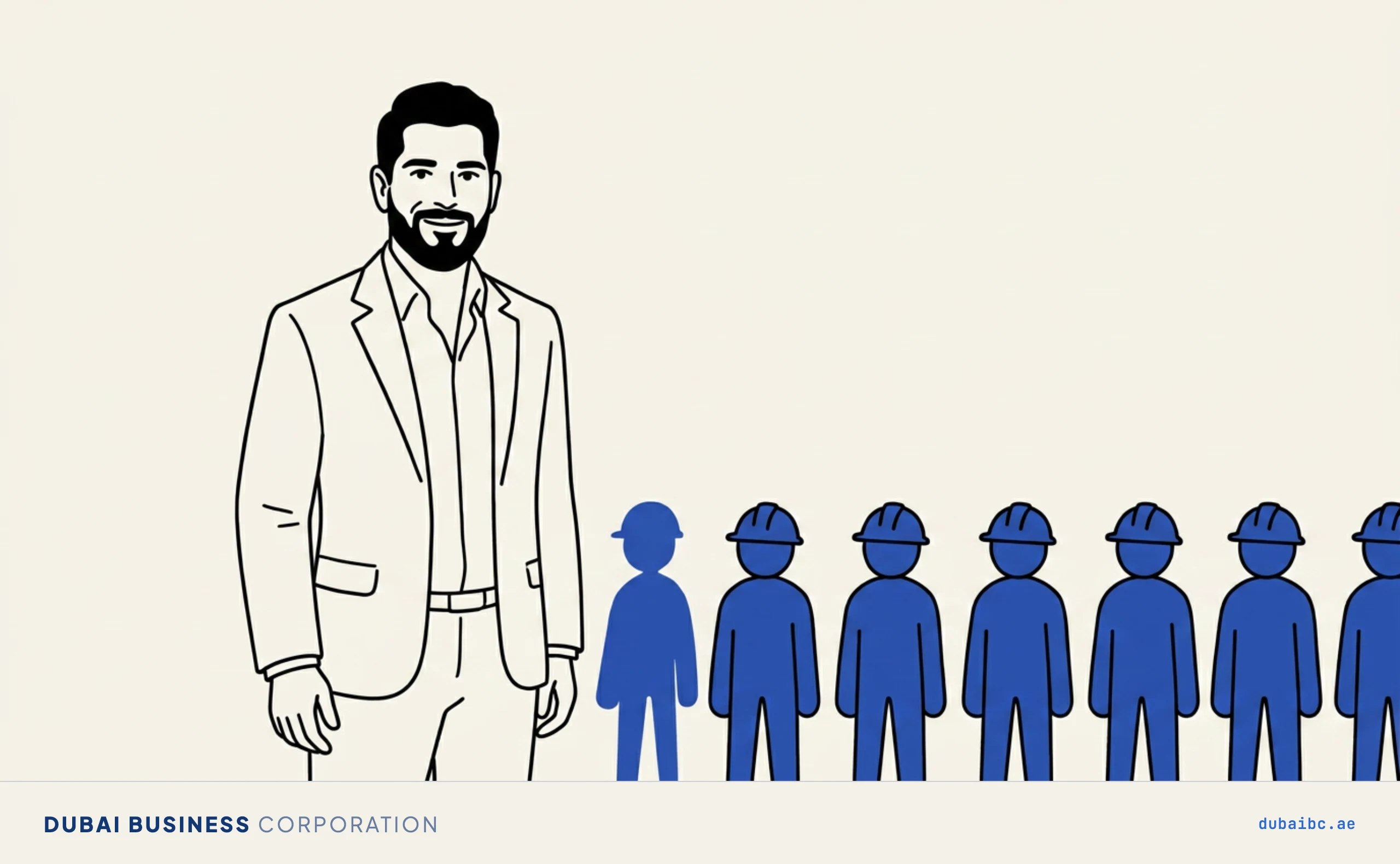
It is also worth planning for skilled versus unskilled roles separately, since some technical or supervisory positions may need specific qualification proof at the visa stage, while general production staff typically do not.
Building this distinction into your hiring plan before the facility opens saves a round of visa amendments once production has already started and staff are needed on the floor.
Insurance and Product Liability Considerations
A manufacturing operation carries risks a trading or consulting business does not: equipment breakdown, workplace injury, product defects reaching a customer, and property damage from the production process itself.
Public liability and product liability insurance are worth arranging before production starts, not after an incident, and some free zones and mainland facilities set minimum insurance requirements as a condition of the tenancy or licence itself.
Employer liability and workers' compensation cover for production staff is generally a legal requirement rather than an optional extra, given the physical nature of the work.
VAT and Corporate Tax for a Manufacturing Business
An industrial licence holder follows the same VAT and corporate tax rules as any UAE company: VAT registration is mandatory once taxable supplies pass AED 375,000, and voluntary from AED 187,500, while corporate tax is 9% on taxable profit above AED 375,000 and 0% below it.
Manufacturing businesses often carry meaningfully larger input VAT on machinery, raw materials and facility fit-out than a trading or service business would, so registering promptly and keeping detailed purchase records to support VAT recovery is worth setting up properly from the start rather than as an afterthought once production is running.
See UAE corporate tax explained for the full mechanics.
Renewing an Industrial Licence
Industrial licences renew annually like any UAE trade licence, but renewal can also trigger a fresh compliance check on environmental and safety standards, particularly if the authority has updated its requirements since the last renewal. Budgeting time for this, not just the fee, avoids a last-minute scramble.
The general renewal process is covered in how to renew a trade licence in Dubai.
Common Mistakes to Avoid
- Applying before the facility is secured. Environmental and safety approvals usually need the actual site to assess.
- Underestimating facility cost. It is typically the largest line item, not the licence fee.
- Skipping sector-specific approvals. Food, chemical and hazardous-material production each carry their own extra review.
- Under-planning visa count against realistic production staffing needs.
- Treating compliance as a one-time step. Environmental and safety standards are inspected on an ongoing basis, including at renewal.
An industrial licence takes more planning than a trading or service licence, largely because it deals with a physical operation, not paperwork alone. Get the facility and its approvals moving early, and the rest of the process follows a fairly standard path.
For the wider jurisdiction decision, our mainland and free zone guides remain the right starting point.
Frequently asked questions
It covers manufacturing, production and processing activities that turn raw materials or components into finished or semi-finished goods, distinct from trading finished products or providing a service.
Yes, in the sense that you need a genuine facility suited to your production process, whether a factory, workshop or free zone light-industrial unit. A flexi-desk or standard office is not sufficient for an industrial licence.
Typically environmental approval, civil defence and fire safety sign-off, and, depending on the product, sector-specific clearance such as Dubai Municipality for food production or additional review for chemicals and hazardous materials.
The facility is usually the largest cost, more than the licence fee itself. Total cost depends heavily on facility size and type, jurisdiction, staffing and visa count, so it is best priced against your specific production plan rather than a general figure.
Often yes for smaller operations, since several free zones offer pre-built light-industrial or warehouse units that are faster to occupy than a bespoke mainland facility. Larger or highly specific production needs may still be better served on the mainland.
See the number for your setup
The cost calculator runs on Dubai Business Corporation’s real price book. Answer a few questions and get your total, fully itemised, in under a minute.