Entry Permit or Residence Visa? The Difference Nobody Explains
 Ali Jasim
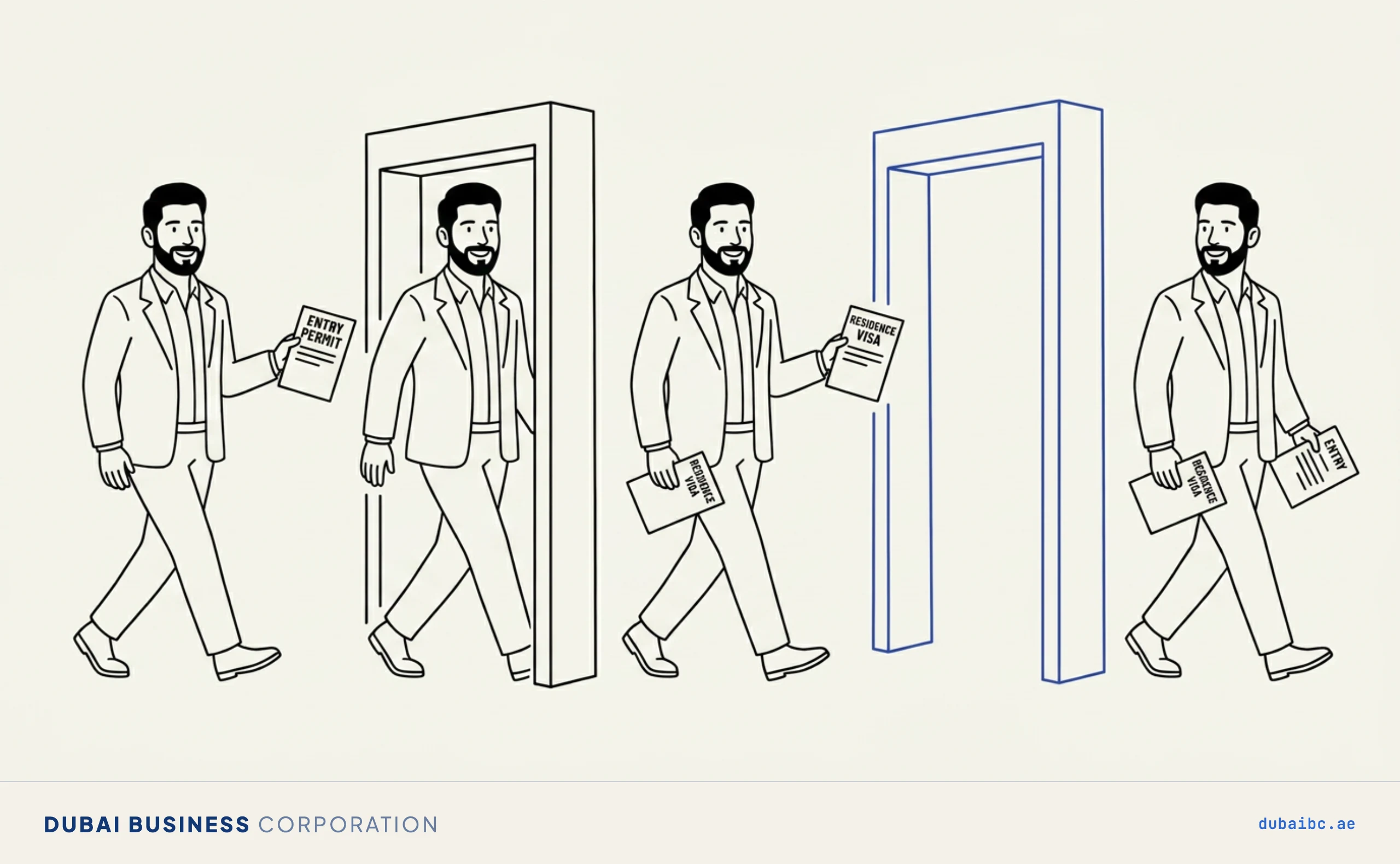
They are two documents at two stages. An entry permit is permission to enter the UAE for a stated purpose, typically valid for a limited window and often for a single entry.
A residence visa is permission to live here, issued after the medical fitness test and Emirates ID steps, and valid for years rather than weeks. Holding an entry permit does not make you a resident, and there is a deadline between arriving on one and completing the residence process.
People use "visa" to mean every document in the process, which is understandable and causes genuine problems. Somebody arrives on an entry permit, believes they are now resident, and discovers weeks later that a step was never completed and a deadline has passed.
This article separates the stages so you know what you are actually holding.
The Stages, in Order
| Stage | What it is | What it lets you do |
|---|---|---|
| Work permit approval | Labour-side clearance, MOHRE | Be legally employable by this employer |
| Entry permit | Immigration permission to enter | Travel to and enter the UAE for the stated purpose |
| Status change | Used instead of entry if already inside | Convert from a visit status without leaving |
| Medical fitness test | A health screening | Proceed to the ID and visa stages |
| Emirates ID application | Biometrics and identity record | Be issued the national identity card |
| Residence visa issued | Permission to reside | Live here, open a bank account, sponsor family |
The full sequence with the labour side interleaved is in our employment visa process guide, and how long a UAE residence visa takes covers the timing.
What an Entry Permit Actually Is
An entry permit is issued by the immigration authority, either the federal body at icp.gov.ae or Dubai's GDRFA, and it says: this named person may enter the country for this stated purpose, within this window.
Three properties matter and all three catch people out:
- It has a purpose. An employment entry permit exists so you can take up that employment. It is not a general-purpose permission.
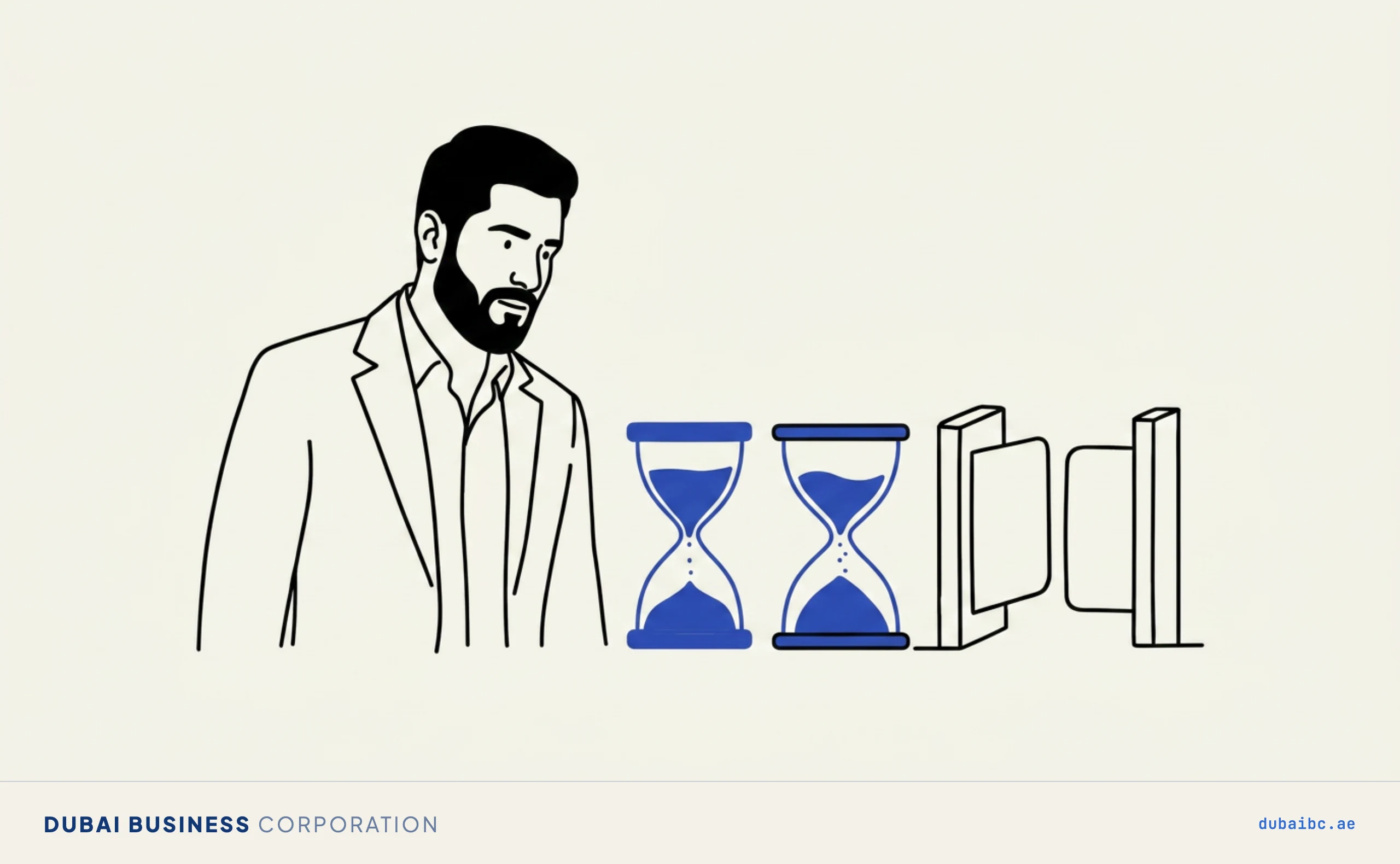
- It has a short validity window, which is a window to use it, not a period of residence.
- It is often single entry. Leaving the country before the residence process completes can invalidate it, which is a genuinely costly mistake.
Status Change: The Version for People Already Here
If somebody is already inside the UAE on a visit or tourist status, they do not need to fly out and re-enter. A change of status converts them onto the residence track in place.
It is convenient and it is not free. From the current price book a change of status is AED 675.65, and it is the reason an in-country applicant costs more than one applying from abroad.
Across a small team arriving on visit visas that difference is real money, and it is avoidable with better timing. Our guide to changing status without leaving the country covers the mechanics.
The Deadline Between the Two
This is the part that genuinely matters. After entering on an employment entry permit, the residence process has to be completed within a defined period.
Medical fitness test, Emirates ID biometrics, then the residence visa issued.

Miss that window and you are not simply behind schedule, you are potentially out of status, which carries fines that accrue daily and can complicate everything that follows.
The exact period and any grace attached to it are set by the authority and have been revised, so confirm the current rule rather than working from what a colleague remembers.
Our guide to overstay fines covers what happens if it slips.
See exactly what an employment, partner or family visa costs, itemised from the real fee schedule.
Where the Passport Stamp Went
A real source of confusion for anyone who did this a few years ago. UAE residency used to be evidenced by a sticker in the passport, and people still expect one.
Residency is now largely electronic, with the record held in the immigration system rather than printed in your passport.

Practically, that means two things. Your Emirates ID is the document you actually use day to day, and a status enquiry is how you evidence residency to yourself.
It also means an absent sticker is not a sign that something went wrong, which is the anxiety this change created. Our guide to checking a visa status by passport number is the reliable way to confirm where you stand.
What Each Document Lets You Do
| Entry permit | Residence visa | |
|---|---|---|
| Enter the country | Yes, for the stated purpose | Yes |
| Live here long term | No | Yes |
| Work legally | No, the work permit and residency must complete | Yes, with the work permit |
| Open a personal bank account | Generally no | Yes |
| Sponsor family | No | Yes, subject to conditions |
| Typical validity | Weeks | Years |
That row about working is worth pausing on. An entry permit issued for employment is permission to arrive and complete the process, not permission to start working the next morning.
In practice most employers manage the gap sensibly, but the legal position is worth understanding by both sides.
Other Entry Permit Types
Employment is the most common but not the only case, and the same distinction applies to all of them:
- Family. A sponsored spouse, child or parent arrives on an entry permit and then completes the residence process. See sponsoring family.
- Investor or partner. A founder taking residency through their own company follows the same two-stage shape. See the investor and partner visa.
- Visit and tourism. These are entry permissions with no residence track behind them, unless a status change is applied.
- Study and treatment, which have their own conditions.
For Employers: The Two Things to Get Right
First, decide where the person will be when you apply. Outside the country is cheaper because no status change is needed, and it removes the risk of a badly timed trip voiding the permit.
If a candidate has not yet travelled, that is worth coordinating rather than leaving to chance.
Second, own the deadline. The employee generally does not know the window exists, so treating the medical and Emirates ID steps as their responsibility is how a case drifts.
Book them, track them, and confirm the residence visa was actually issued rather than assuming it followed. Our guide to the cost of hiring your first employee covers the full picture around this.
One more distinction worth drawing, because it trips up people arriving from countries where the two are the same thing. A UAE visit or tourist visa is also technically an entry permission, but it has no residence track behind it.
So somebody arriving as a tourist has not started any residence process at all, and converting them onto one requires a deliberate change of status rather than simply applying later. Assuming otherwise is how a candidate ends up needing to leave and re-enter.
How Long Each Stage Takes
Nobody publishes a reliable timetable because too much depends on the case, but the shape is consistent and knowing it helps you plan.
The labour side comes first and is usually the fastest when the documents are clean. The entry permit follows and is typically issued in days rather than weeks.
Then the applicant travels, or changes status if already here. The medical is an appointment, so its timing is yours to control. Emirates ID biometrics is another appointment.
The residence visa is then issued against the completed file.
What actually determines the total is not the processing time of any single step, it is whether any step has to be repeated.
A rejected photograph, a name that does not match the passport, an unattested certificate for a skilled role: each of those does not delay one step, it delays every step after it.
That is why our own visa pipeline front-loads the document check rather than discovering problems at stage four. Our guide to how long a UAE residence visa takes goes into the timing in detail.
What to Check at Each Stage
A short list you can actually use, because the failure modes are predictable:
- Before the entry permit: passport validity comfortably beyond the process, name exactly as printed on the passport, photograph to the current specification, and any attested certificate the role requires. See document attestation.
- On arrival: confirm the entry permit was actually used and recorded, and confirm the deadline for completing residency. Ask, in writing, what that date is.
- After the medical: confirm the result was recorded against the file rather than assuming.
- After biometrics: get the Emirates ID application number, which is the reference for every later check.
- At the end: run a free status enquiry yourself and see the residence visa recorded. Do not accept "it is done" without seeing it.
That final point is the one that catches people, and it costs nothing to do. A great many "my visa was never issued" situations are cases where every party assumed a different party had confirmed it.
The Short Version
An entry permit is a short-lived permission to arrive for a purpose. A residence visa is a multi-year permission to live here, and it only exists once the medical and Emirates ID steps are done.
There is a deadline between them, leaving the country in between can void the permit, and your Emirates ID rather than a passport sticker is what proves your status. Confirm the current rules at u.ae.
Frequently asked questions
An entry permit is permission to enter the UAE for a stated purpose, valid for a limited window and often for a single entry. A residence visa is permission to live here, issued only after the medical fitness test and Emirates ID steps, and valid for years. Holding an entry permit does not make you a resident, and there is a deadline between arriving on one and completing the residence process.
It is risky and often the most expensive avoidable error at this stage. Depending on the permit type, travelling out before the residence visa is issued can void a single-entry permit and require the entry stage to be paid for and repeated. If a trip is genuinely unavoidable, confirm the position before booking rather than afterwards.
Because UAE residency is now largely electronic, with the record held in the immigration system rather than printed as a sticker. An absent stamp is not a sign that something went wrong. Your Emirates ID is the document you use day to day, and a free status enquiry on the ICP or GDRFA portal is how you confirm your residency position.
A change of status converts somebody already inside the UAE on a visit or tourist status onto the residence track without leaving the country. From the current price book it is AED 675.65, which is why an in-country applicant costs more than one applying from abroad. If a candidate has not yet travelled, applying before they arrive avoids the cost entirely.
An employment entry permit is permission to arrive and complete the residence process, not permission to begin work the following morning. The work permit on the labour side and the residence visa on the immigration side both need to be in place for employment to be fully legal. Most employers manage the gap sensibly, but both sides should understand the position.
See the number for your setup
The cost calculator runs on Dubai Business Corporation’s real price book. Answer a few questions and get your total, fully itemised, in under a minute.