UAE Visa Status Change Without Leaving the Country
 Ali Jasim
A UAE visa status change lets someone already inside the country on one visa status, most commonly a visit visa, convert directly to a residence visa, employment, family, investor or another category, without exiting and re-entering the UAE. It runs through GDRFA, requires the sponsoring party to submit the application with the entry permit and supporting documents, and still includes the standard medical test and Emirates ID steps.
Not every visa category is eligible for in-country conversion; some require an exit and re-entry instead, so eligibility should be confirmed before assuming either route.
One of the more practical questions people ask when moving to the UAE for a job, marriage, or a new company is whether they need to leave the country and come back in to activate their new visa. In many cases the answer is no, an in-country status change handles it.
But not every visa category qualifies, and picking the wrong assumption can cost you a flight and lost time. Here is how it actually works.
What a Status Change Actually Means
Every person in the UAE holds a visa status: visit, tourist, employment, residence, and so on.
A status change is the administrative process of converting from one status to another while remaining physically inside the country, rather than the applicant leaving and coming back on a new entry permit.
It is processed through GDRFA (or the Federal Authority for Identity, Citizenship, Customs and Port Security in some emirates), usually initiated by the new sponsor: an employer, a spouse, or a company for an investor visa.
Understanding this distinction early saves a lot of confusion later, because the fee schedule, the paperwork, and the eligibility rule attached to a status change are all genuinely different from the ones attached to a simple extension or a straightforward renewal of an existing visa.
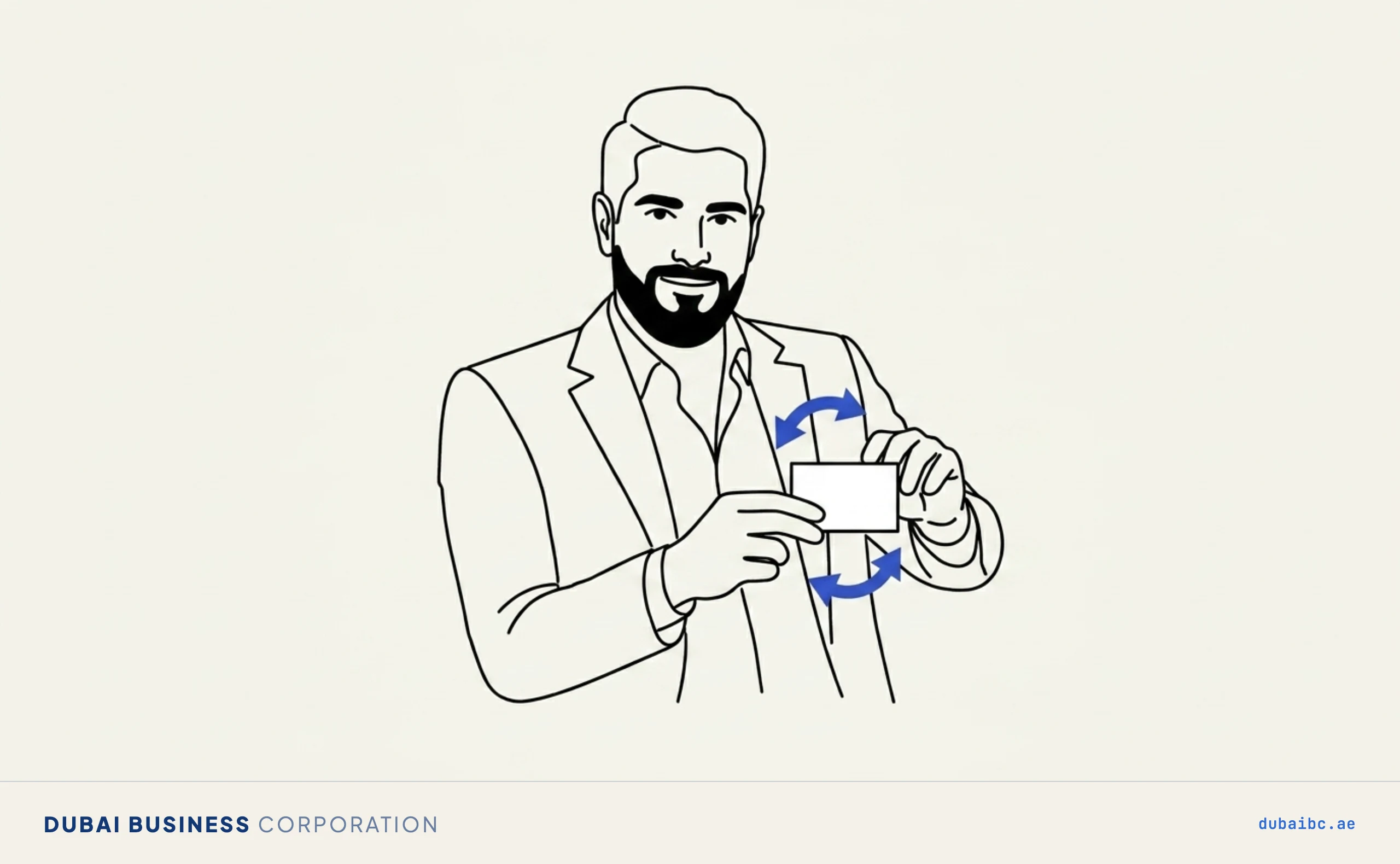
It is worth being clear about what a status change is not. It is not a visa extension, which simply prolongs the same status you already hold.
It is not a renewal, which repeats an existing category under the same sponsor. A status change specifically moves you from one category to a genuinely different one, most often from a temporary, short-term status into a longer residence status tied to a new sponsor.
That distinction matters because each of these three processes, extension, renewal and status change, has its own fee, its own form, and its own eligibility rule, and mixing them up is a common source of confusion at the application stage.
The Most Common Scenario: Visit Visa to Residence Visa
The typical case is someone who enters the UAE on a visit visa, secures a job offer, and wants to convert directly to an employment residence visa without flying out and back in.
If the specific visit visa category permits in-country conversion, the new employer files a status change application alongside the standard work permit and entry permit process described in our employment visa guide.
The same logic applies to someone marrying a UAE resident and converting to a family visa, or a founder converting to an investor visa once their company is formed.
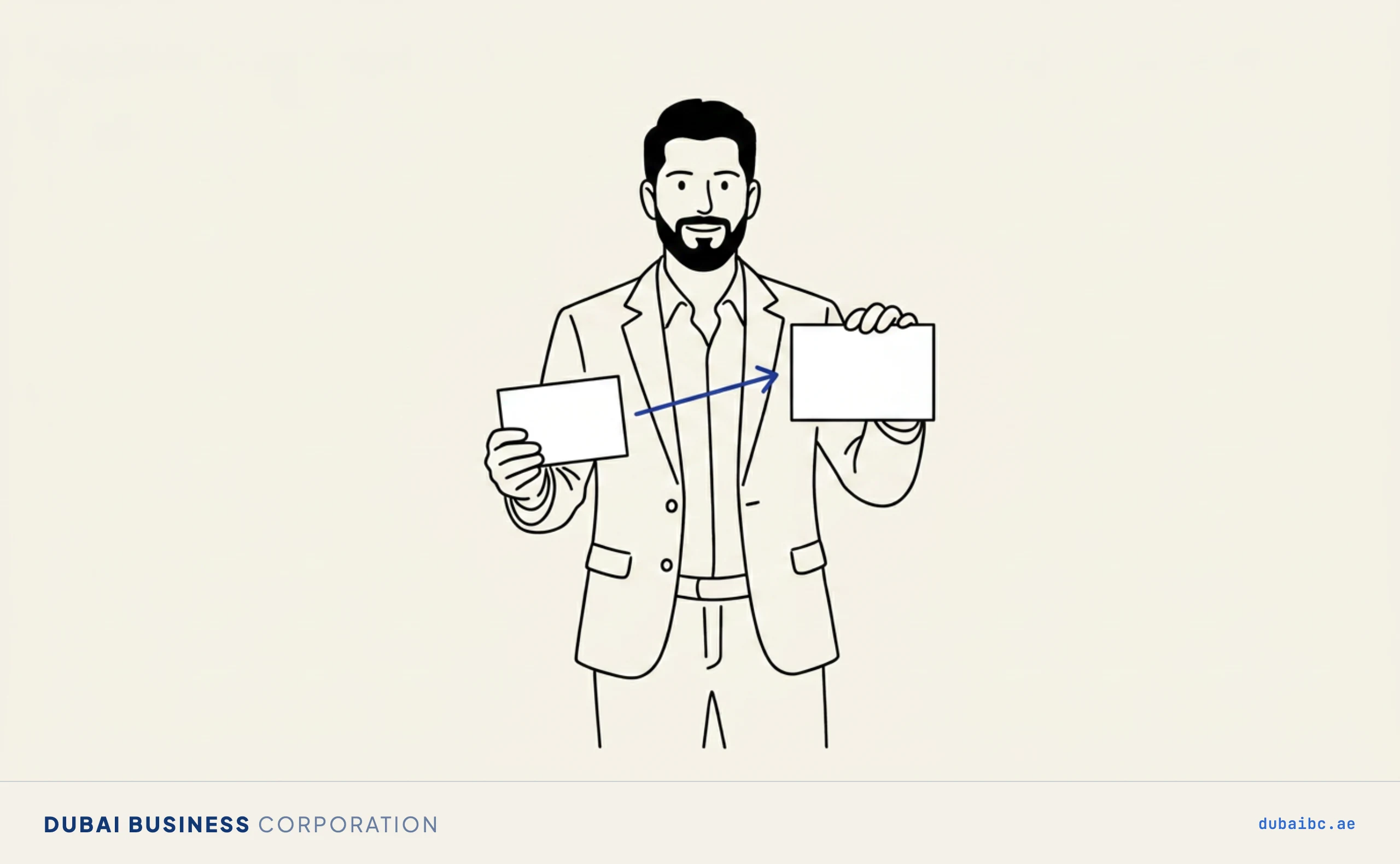
A related and increasingly common scenario is a job seeker who enters on a dedicated job-seeker or multiple-entry visit visa specifically designed to allow a longer search window inside the UAE.
These categories were introduced partly to make this exact conversion smoother, and in most cases they do support an in-country status change once an offer is secured, though the applicant should still confirm the specific permit conditions rather than assume every job-seeker visa behaves identically.
Why Some Categories Require Exit and Re-Entry
The rule exists because certain entry permits are tied to a specific purpose (tourism, a specific event, or a visa-on-arrival category for certain nationalities) and the system requires a formal re-entry to reset the visa purpose cleanly.
It is not a punishment or a sign anything went wrong; it is simply how that entry category is structured.
When this applies, the usual pattern is a short trip, commonly to a neighbouring country, re-entering on the new entry permit, after which the process continues the same as any new arrival, meaning the medical test, Emirates ID and stamping steps are unaffected by having taken the trip.
This is also where nationality can matter. Some visa-on-arrival categories are only issued to citizens of specific countries under a specific reciprocal arrangement, and that arrangement can be structured in a way that does not carry over to an in-country conversion.
If your entry stamp was issued on that basis, it is worth checking with your new sponsor early, since it changes the shape of your whole plan, including travel bookings and any notice period with a current employer.
How Employers and Sponsors Typically Manage the Process
From the sponsor side, whether that is a new employer, a spouse, or a company, the status change is usually filed as part of the same application package that includes the work permit or supporting approval for the new category.
Most sponsors work with a PRO (public relations officer) or a visa services provider to submit this correctly, since a rejected or incomplete status change application can cost days of resubmission.
If you are the one being sponsored, it is reasonable to ask your new sponsor directly whether they are handling the filing themselves or through a service provider, and to confirm the expected submission date rather than assuming it has already started.
Smaller employers without an in-house PRO sometimes underestimate how much coordination a status change actually requires, particularly around timing the current visa expiry against the new sponsorship start date.
Asking a formation or visa services partner to run this specific piece, even if the rest of the hire is handled internally, is a reasonable and common way to avoid a gap between the old status and the new one.
The Step-by-Step Status Change Process
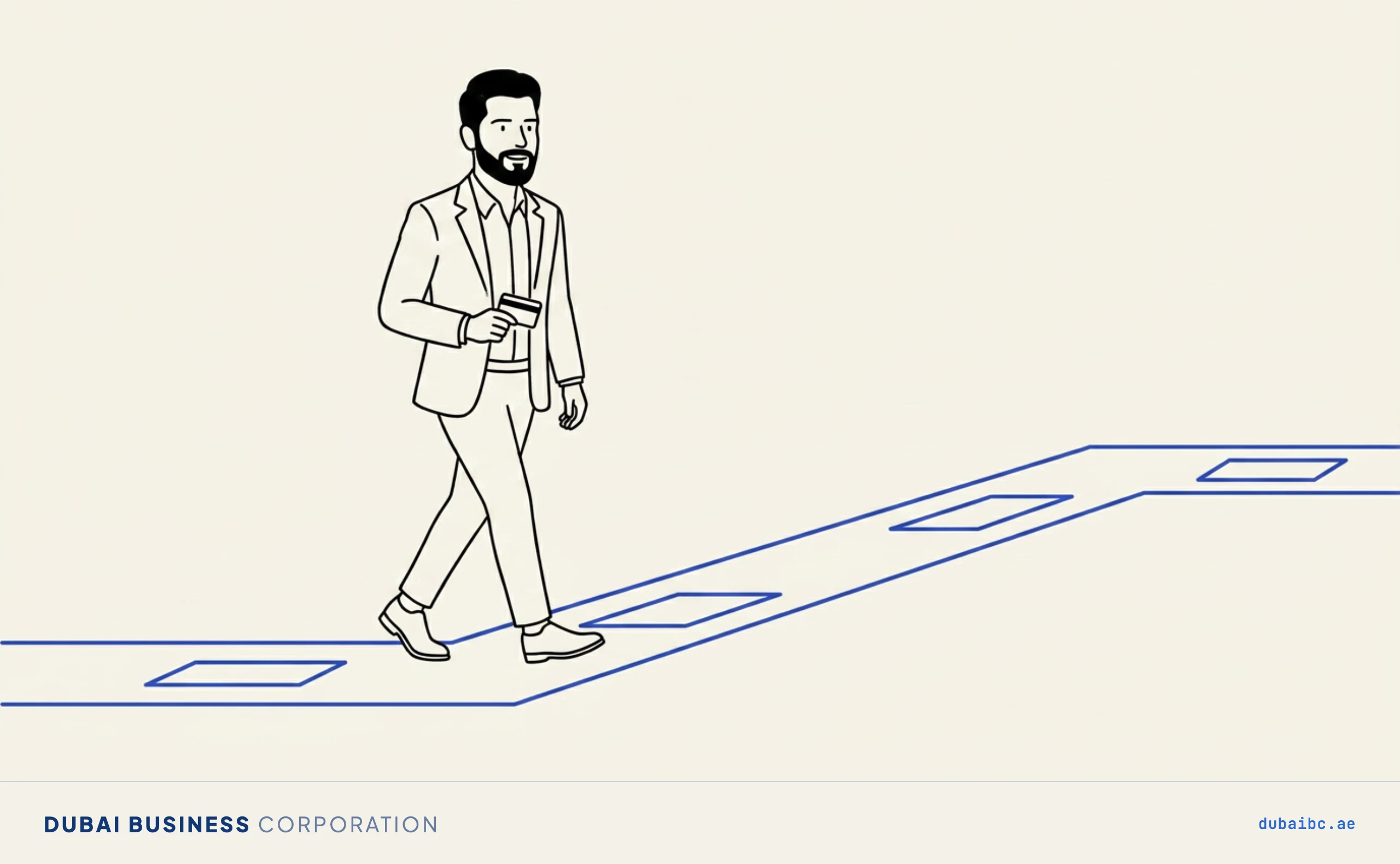
- Confirm eligibility. Check with GDRFA, the free zone, or your visa handler whether your current status allows in-country conversion.
- The new sponsor initiates the application, whether an employer, spouse, or company, alongside the relevant work permit or supporting approval.
- Submit the status change request with the current visa copy, passport, and supporting documents for the new category.
- Pay the status change fee, which is separate from the entry permit and stamping fees.
- Complete the medical fitness test and Emirates ID biometrics, the same as any new residence visa.
- Receive the new residence visa stamped against the new status, completing the conversion.
Timeline for a Status Change
| Stage | Typical time |
|---|---|
| Eligibility confirmation and application submission | 2 to 5 working days |
| Status change approval | 3 to 7 working days |
| Medical test and Emirates ID | 1 to 2 weeks |
| Final visa stamping | 2 to 5 working days |
Altogether, a straightforward in-country status change is usually complete within 2 to 4 weeks, similar to the timeline in our guide to how long a UAE residence visa takes in general.
The exit-and-re-entry route adds the time and cost of the trip itself on top of the same underlying process.
Price the visa route you are converting to, and we will help you confirm whether an in-country change or an exit and re-entry applies to your specific status.
What a Status Change Costs
A status change carries its own fee on top of the fees for the new visa category itself, entry permit, medical test, Emirates ID and stamping, so it should be budgeted as an additional line rather than assumed to be included.
The exit-and-re-entry route, where it applies, adds the cost of the trip itself, flights and often a short hotel stay, on top of the same underlying visa fees, which is one reason confirming eligibility before booking anything matters financially as well as logistically.
| In-country status change | Exit and re-entry | |
|---|---|---|
| Status change fee | Applies | Not applicable |
| New visa category fees | Applies (permit, medical, Emirates ID, stamping) | Applies (permit, medical, Emirates ID, stamping) |
| Travel cost | None | Flight and often a short stay abroad |
| Typical extra time | None beyond standard processing | Days, depending on the trip |
Documents Typically Required
- Passport with sufficient remaining validity.
- Current visa copy showing the status being converted from.
- Supporting document for the new status: labour contract for employment, marriage certificate for family, trade licence and shareholder record for investor.
- Passport-size photographs meeting UAE specifications.
- No-objection or cancellation confirmation, if applicable, from a previous sponsor.
It is also possible to go through more than one status change in a working life in the UAE, for example converting from a visit visa to an employment visa, then years later from that employment visa to an investor visa once a company is formed, and later still to a Green Visa or a Golden Visa as circumstances change.
Each conversion is assessed on its own eligibility at the time, and there is no cap on how many times someone can change status over the course of their time in the UAE, provided each individual conversion meets its own requirements.
What Can Go Wrong
- Assuming eligibility without checking. Confirm the rule for your specific visa category before the new sponsor files anything.
- Letting the current visa expire mid-process. Track your current visa validity throughout the status change, not just the new one.
- Overlapping sponsors incorrectly. If a previous employer visa needs cancelling first, sequence this correctly with the new sponsor application.
- Booking travel assuming exit is not required, then finding out it is. Confirm this early, since it changes your whole plan.
- Not budgeting the status change fee separately. It sits on top of the new visa category fees, not instead of them.
- Waiting for the new sponsor to raise it first. If you are unsure whether the filing has started, ask directly rather than assuming it is in progress.
A status change is usually the smoother, cheaper path when it is available, and most common scenarios, job offer, marriage, becoming a shareholder, do qualify. The exception is real but narrower than people assume.
If you are unsure which applies to you, our services team can confirm eligibility before you make any travel or timing decisions around it, and can also confirm the current fee schedule so nothing is a surprise once the application is filed, or the exact expected timeline for your specific case.

Frequently asked questions
In many cases yes, through an in-country status change processed by GDRFA. It depends on your current visa category; some categories are eligible for in-country conversion, while others require an exit and re-entry on a new permit.
Certain short-term tourist entries and visas issued through specific channels, including some visa-on-arrival categories for certain nationalities, are structured to require an exit and re-entry rather than an in-country conversion. Confirm your specific category before assuming either route.
A straightforward in-country status change typically takes 2 to 4 weeks from application to final visa stamping, including the mandatory medical test and Emirates ID steps.
The new sponsor, whether an employer, a spouse, or your own company for an investor visa, typically initiates the status change application alongside the relevant approval for the new visa category.
Yes. A status change is still a residence visa application at its core, so the standard medical fitness test and Emirates ID biometrics steps apply the same as any new visa.
See the number for your setup
The cost calculator runs on Dubai Business Corporation’s real price book. Answer a few questions and get your total, fully itemised, in under a minute.