How to Open a Cafe or Coffee Shop in Dubai
 Ali Jasim
A Dubai cafe is licensed as a mainland food establishment, usually under a cafeteria or coffee shop activity rather than a full restaurant activity, with Dubai Municipality approving the premises and Civil Defence signing off on safety. The licence is routine.
The two things that actually decide the business are the lease and the menu format, because rent per square foot and average ticket size are what a cafe lives on.
Dubai has an unusually developed coffee culture for a city its size, and opening a cafe is one of the most common first businesses for people who move here. It is also one of the most commonly underestimated.
The permits are ordinary. The economics of a small unit paying mall rent and selling items priced in single digits are not.
Cafeteria, Coffee Shop or Restaurant: Pick the Right Activity
Dubai licenses food businesses by activity, and the activity you take determines what you can cook and what the premises must provide. A coffee shop or cafeteria activity covers beverages and limited food preparation.
A restaurant activity covers full cooking with a commercial kitchen behind it.
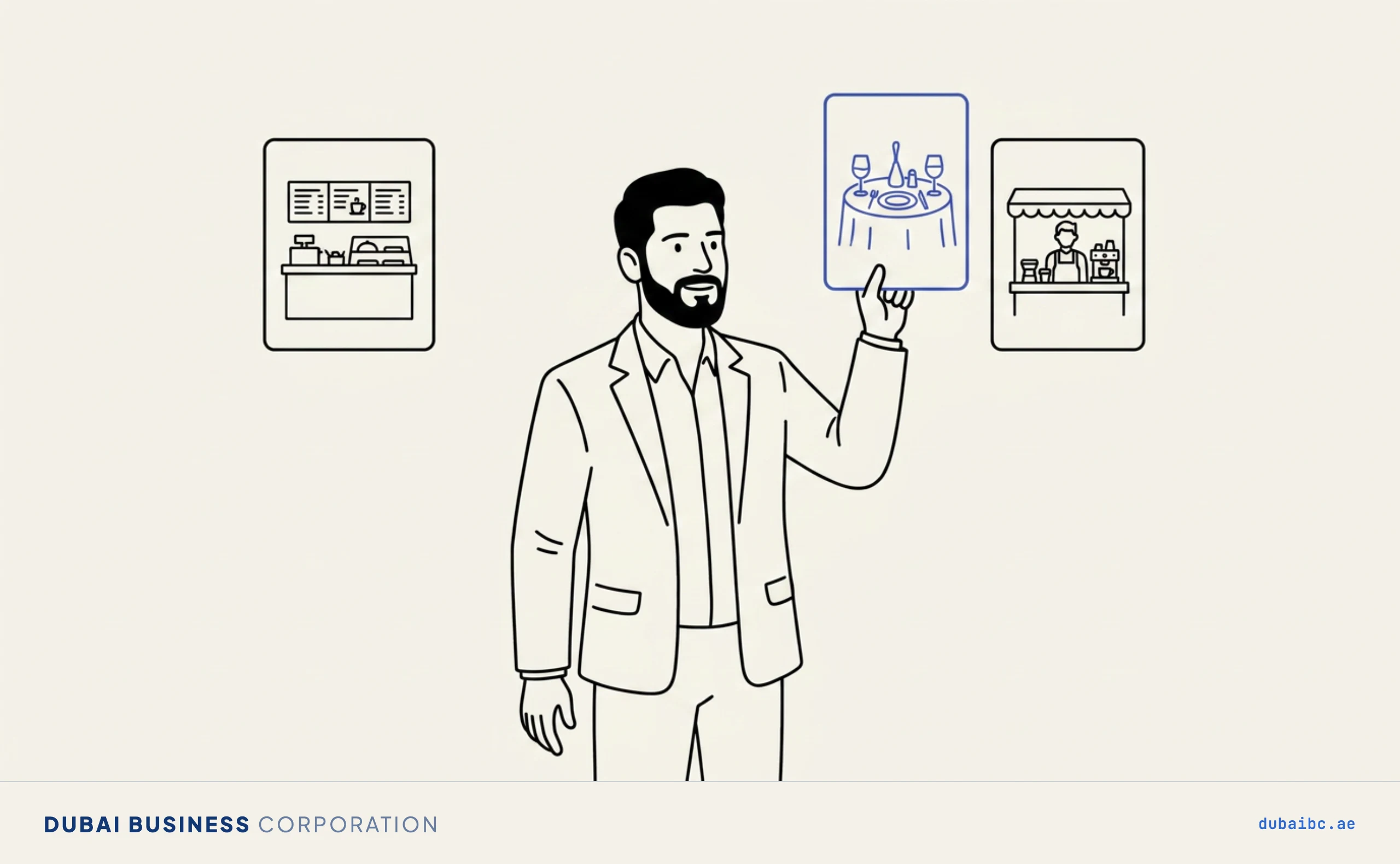
Choose based on the menu you actually intend to serve in year one. Taking a light activity and then cooking a full menu is a compliance problem.
Taking a full restaurant activity for a business that sells coffee and pastries means building and paying for a kitchen you do not need. Activities can be amended later, as our guide to adding or changing activities explains, so start honest rather than ambitious.
Format Decides Almost Everything
| Kiosk or cart | Small cafe | Cafe with kitchen | |
|---|---|---|---|
| Typical size | Very small | Small unit | Larger unit |
| Fit out cost | Low | Medium | High |
| Menu | Drinks, packaged food | Drinks, light food | Full food |
| Extraction needed | Usually not | Sometimes | Yes |
| Staff per shift | 1 to 2 | 2 to 4 | 4 plus |
| Rent exposure | Lower | Medium | Highest |
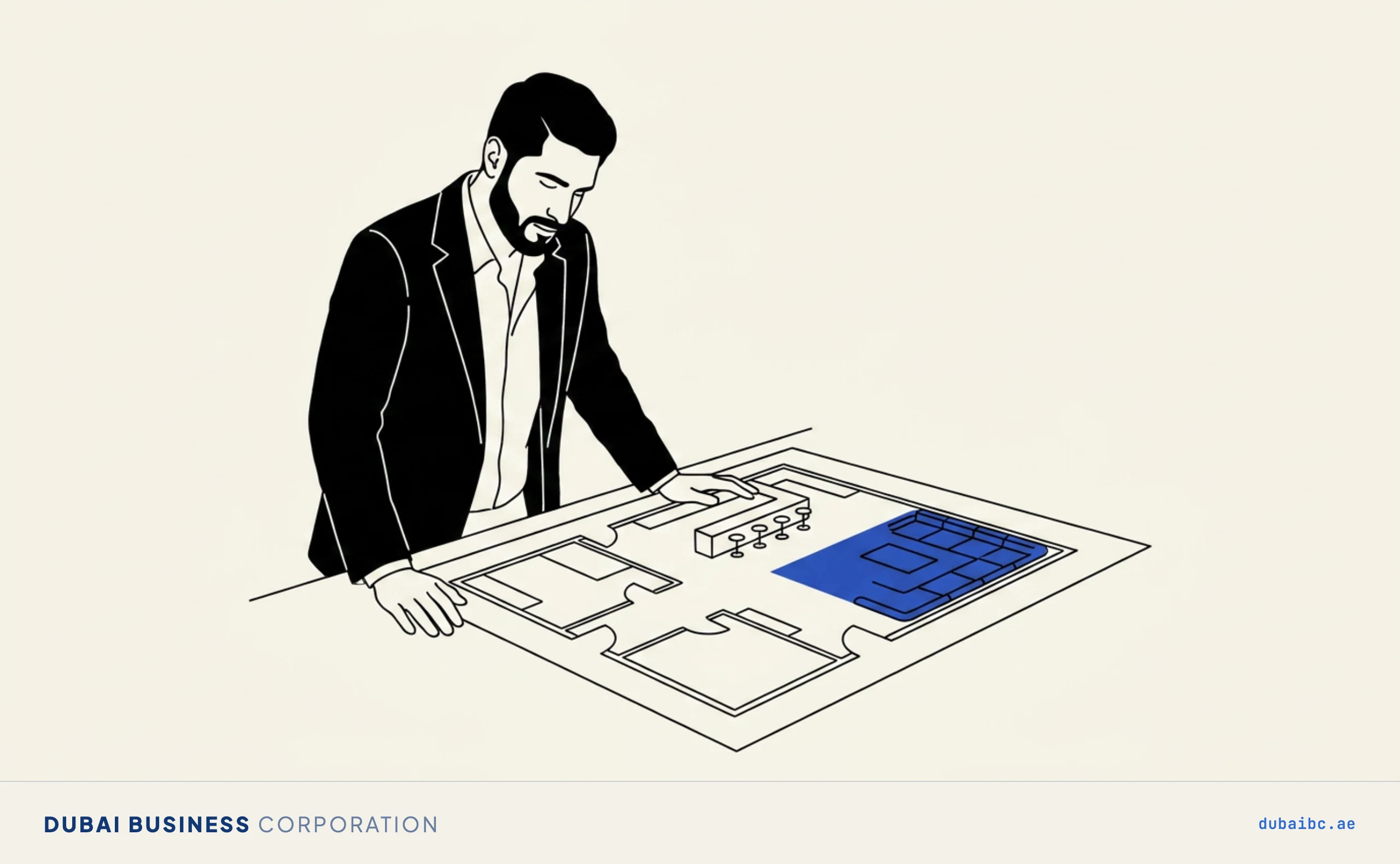
The kiosk route is genuinely underrated. A well placed cart in a mall or office building can produce a strong revenue per square foot with a fraction of the fit out, and it is a low risk way to prove the brand before signing a five year lease on a corner unit.
The Approval Sequence
- Reserve the trade name and take initial approval for the food activity.
- Sign the lease and register it on Ejari, after checking the unit is approved for food use.
- Submit the layout to Dubai Municipality food safety before you build.
- Get Civil Defence approval for fire safety, which applies to any public premises.
- Build to the approved drawings.
- Pass the food safety inspection and receive the food establishment permit.
- Issue the trade licence and complete the food handler training for all staff.
Get the mainland licence, approvals and staff visa costs itemised before you negotiate a lease.
Roasting, Importing and the Coffee Supply Chain
Brewing coffee is part of a cafe activity. Roasting green beans is food manufacturing and needs its own approval and suitable premises, which is why most Dubai speciality cafes buy from a licensed local roaster rather than roasting in the shop.
If roasting is central to your concept, plan it as a second facility, not as a corner of the cafe.
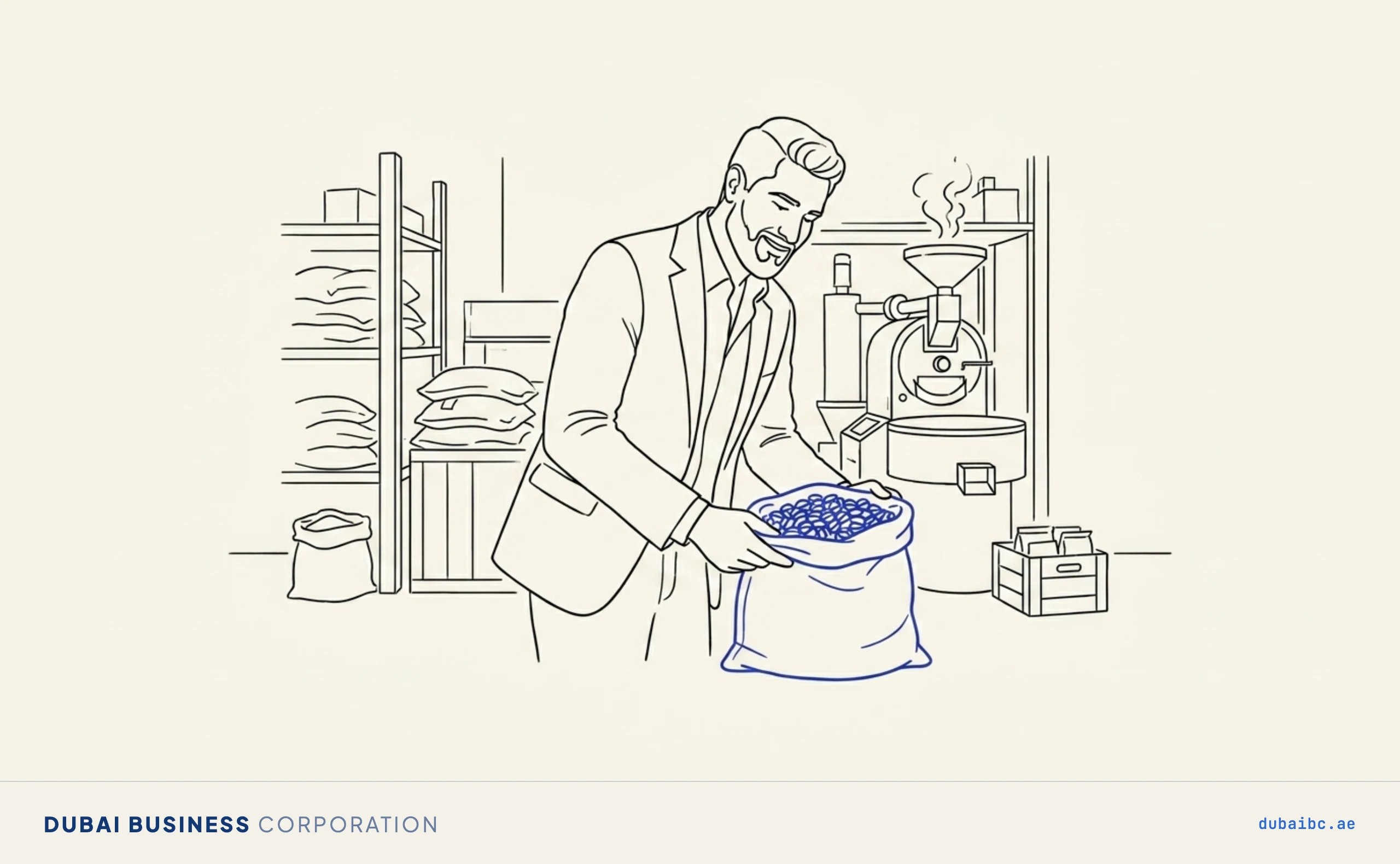
Importing beans directly brings food import rules into play, with product registration and clearance handled through the municipality and federal food safety systems. Our import export guide covers the general mechanics of bringing goods in.
Shisha, Alcohol and the Things You Cannot Just Add
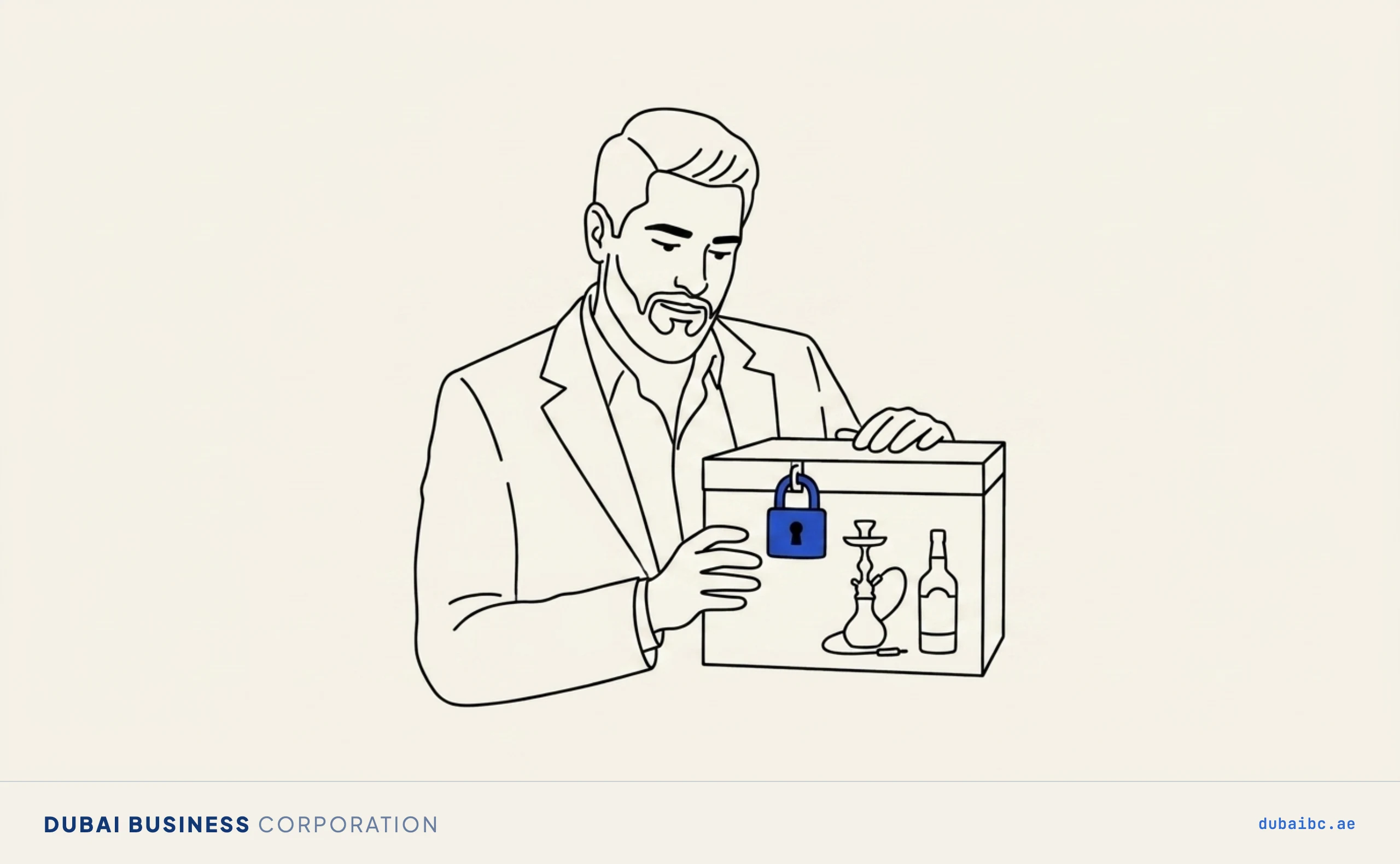
Shisha service is a separate permit with real location restrictions, and it is not available to every cafe in every building. Alcohol is a wholly separate licensing regime handled at emirate level and is not something a small cafe should assume it can obtain.
Both are best treated as excluded from the plan unless you have specific confirmation for your specific premises.
What It Costs
Four blocks again. Company and licence, which is fixed and can be quoted precisely.
Rent and the security deposit, which in a good location will be the largest number. Fit out and equipment, where an espresso machine, grinder, refrigeration and counter work add up faster than founders expect.
And working capital for the first several months, because a new cafe rarely covers its rent in month one.
Get the fixed side exactly right using our cost calculator, then build the rest of the plan around the actual lease you are being offered. Our Dubai premises cost guide gives context on how commercial rent behaves here.
Staffing a Cafe
Baristas, a shift lead and a cleaner is a realistic minimum for a small unit trading long hours. Every staff member needs a work permit from MOHRE, a residence visa, and the Dubai Municipality food handler card.
Wages go through WPS.
Visa cost per employee is a known, itemisable number rather than a mystery, and it is the line most first time cafe owners forget when modelling a seven day trading week. See the cost of hiring for the real figures.
Tax and Daily Compliance
Food and beverage sales are standard rated at 5% VAT, so registration becomes mandatory above AED 375,000 of taxable supplies, which a busy cafe passes quickly.
Corporate tax applies to profits above AED 375,000 at 9%, with Small Business Relief available to smaller businesses for now.
The Federal Tax Authority publishes both regimes.
Day to day, keep the food safety documentation current: handler cards, cleaning schedules, temperature logs and pest control records. Municipality inspections are routine rather than exceptional, and a cafe that keeps its records is a cafe that passes them.
Common Mistakes
- Signing a lease on footfall alone without checking food use is permitted in that unit.
- Taking a light activity and cooking a heavy menu.
- Overbuilding the fit out before proving the location works.
- Ignoring the average ticket. A cafe with a low ticket needs volume that a quiet corner cannot deliver.
- Assuming shisha can be added later to lift the evening trade.
- Understaffing the morning peak, which is where a cafe earns most of its money.
The Numbers Behind the Counter
A cafe is a rent business wearing an apron. Take the monthly rent, divide it by the number of trading days, and you have the amount of gross profit the shop must produce every single day before it has paid a single wage.
Put your realistic average ticket next to it and you get the number of customers per day the site actually requires. Do this before signing, not after.
Two levers move that arithmetic. The first is the average ticket, which is why food matters even in a coffee led shop: a pastry or a sandwich attached to half your drinks changes the model completely.
The second is the peak, because most cafes earn a disproportionate share of the day's money in a few morning hours, and any queue you cannot serve in that window is revenue that simply never arrives.
Waste is the quiet third factor. Fresh food thrown away at close is pure loss, and a cafe that over produces every day can be busy and still unprofitable.
Track it weekly from the first month rather than discovering it in the annual accounts.
Franchise, Own Brand or Licensed Concept
Dubai supports all three. A franchise of an established coffee brand brings recognition, a proven format and supplier terms, at the cost of a fee, a royalty and very little freedom.
Your own brand gives you full control of the concept and all of the margin, and requires you to build the reason anyone should walk in.
The middle option, taking a regional licence for a concept from elsewhere, is common here and carries its own paperwork: the agreement itself, the trade name and mark handling, and clarity on who owns the customer if the relationship ends. Whichever route you choose, the licensing and municipality process is identical.
What differs is the commercial contract sitting behind it.
Is a cafe worth opening in Dubai?
It is a competitive market with real demand and no shortage of good operators, which means the concept and the site have to be right rather than merely present. The regulatory route is straightforward and predictable, and that is genuinely the easy part.
If you are testing an idea, start small, take a kiosk or a modest unit, and prove the ticket and the repeat rate before committing to a flagship.
Our restaurant guide is the one to read instead if the plan is a full kitchen and table service.
One honest note on timing. A cafe rarely reaches its steady state trade in the first quarter, because a coffee shop is a habit business and habits take a season to form.
Budget for that. The most common cause of a good cafe closing in Dubai is not a bad concept or a failed inspection, it is running out of working capital in month five while the trade is still building.
And be specific about who you are for. A cafe that serves office workers on the way in needs speed, a tight menu and an efficient counter.
A cafe that serves people who sit for two hours with a laptop needs seating, power sockets and a completely different rent per seat calculation. Both work in this city.
Trying to be both in one small unit usually works less well than either.
If the concept ends up leaning heavily on delivery rather than walk in trade, read the cloud kitchen guide before you sign a retail lease.
Paying prime footfall rent for orders that arrive through an app is the most expensive way to run a delivery business.
Frequently asked questions
A Dubai mainland trade licence carrying a cafeteria or coffee shop activity, plus a Dubai Municipality food establishment permit for the premises and Civil Defence approval for fire safety. Which food activity you take matters, because a light beverage activity does not cover a full cooking operation and the premises requirements differ accordingly.
Generally no, if you intend to serve the public in Dubai. Free zone licences are designed for business conducted inside the zone or internationally, and a customer facing cafe serving the local market is a mainland activity. Some free zones host food outlets inside their own premises, but that is a tenancy inside the zone rather than a general licence to trade citywide.
Yes. Brewing coffee is part of a cafe activity, but roasting green beans is food manufacturing with its own approval and premises requirements. Most speciality cafes in Dubai buy from a licensed local roaster instead. If roasting is core to your concept, plan it as a separate approved facility rather than as equipment in the shop.
The licence, approvals and visas are a fixed, knowable figure you can itemise precisely. Everything else is driven by the lease and the fit out, which vary enormously between a mall kiosk and a corner unit in a prime location. Rent and fit out normally exceed the setup cost several times over, so price those first.
Only with a separate permit, and only where the location allows it. Shisha service in Dubai is restricted by area and premises type, and it is not something to build into a business plan on the assumption it can be added later. Confirm whether it is possible for your specific unit before treating it as a revenue line.
See the number for your setup
The cost calculator runs on Dubai Business Corporation’s real price book. Answer a few questions and get your total, fully itemised, in under a minute.