UAE Investor and Partner Visa: Residency Through Your Own Company
 Ali Jasim
A UAE investor or partner visa is a residence visa granted to a shareholder or partner in a UAE-registered company, mainland or free zone, based on ownership rather than an employment contract. It self-sponsors the holder; their own company sponsors them, not an employer.
Eligibility generally follows from being a registered shareholder or partner on the licence, and free zones and the mainland authority each set their own share value or structure conditions. It typically runs 2 to 3 years and renews alongside the company licence.
If you own or co-own a UAE company, you do not need a separate employer to sponsor your residence visa. You can be your own sponsor through the company itself, using an investor or partner visa.
It is one of the most common routes into UAE residency for founders and shareholders, and it is often misunderstood as being the same as an employment visa. It is not.
Here is how it actually works.
What Makes an Investor Visa Different From an Employment Visa
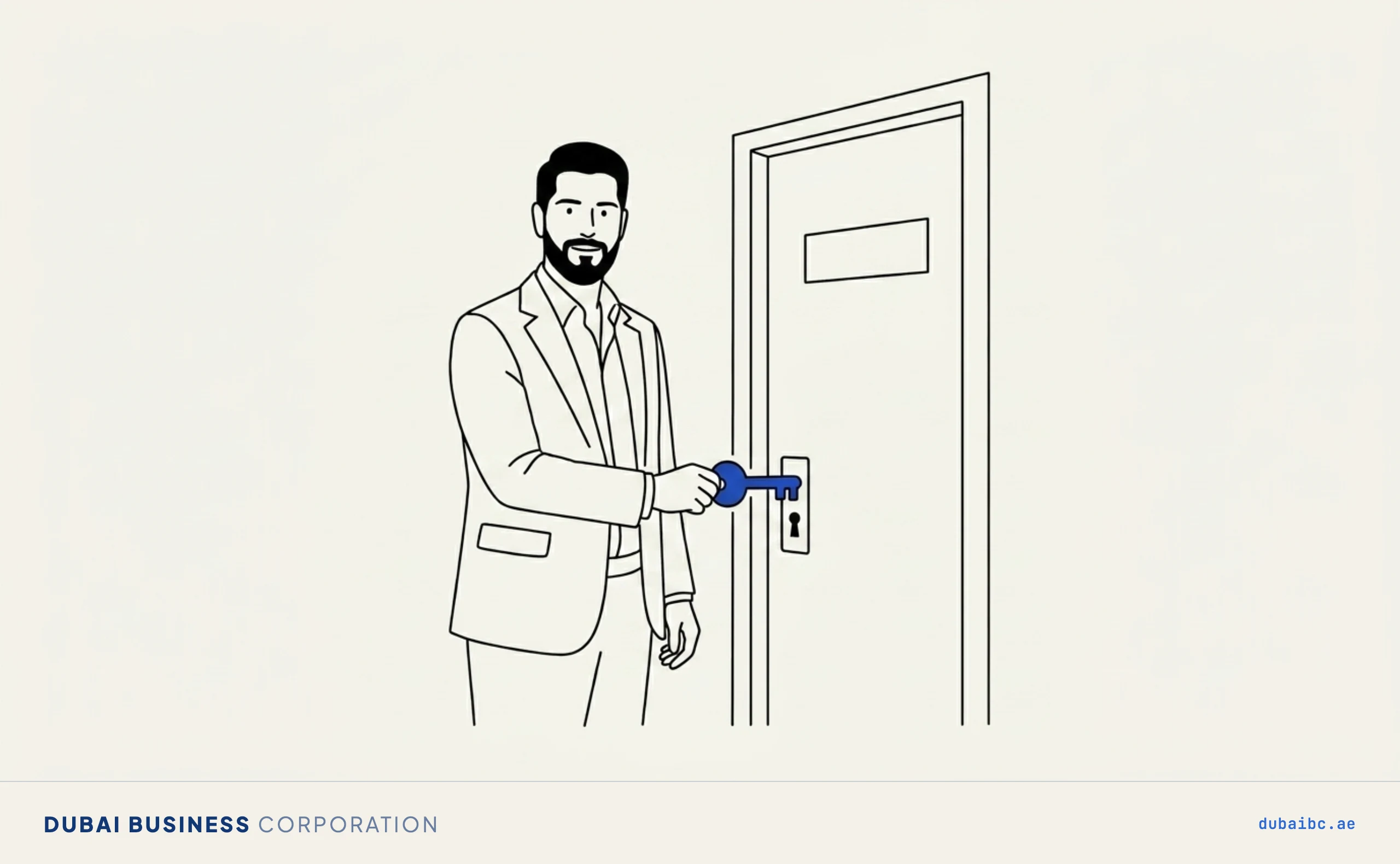
An employment visa has an employer as sponsor, and the employee has no ownership in the business. An investor or partner visa flips that: the visa holder is an owner, whether sole or alongside co-founders, and the company they own sponsors their own residency.
There is no separate employer to answer to for the visa itself, though company obligations, filings and renewals still apply. This is the natural route for founders who set up a mainland or free zone company and want to live in the UAE running it.
Who Qualifies
Qualification generally comes down to being listed as a shareholder or partner on the company trade licence. On the mainland, this typically means being a partner in an LLC or a shareholder of sufficient standing in the company structure.
In free zones, each authority sets its own rules, and many link visa eligibility to a minimum share capital value declared for the company, or simply to holding shares as recorded in the licence.
Because these conditions vary by free zone and by mainland activity, this is one area where a generic number would mislead rather than help; the exact bar depends on where you incorporate.

Multiple shareholders in the same company can each hold their own investor visa, provided each individually meets the relevant free zone or mainland condition and the company overall visa quota, tied to office space or package, has room for them.
This is common in founding teams of two or three partners, each taking their own investor visa rather than one partner holding an employment visa under the company they co-own, which is a mismatch some founders make by accident when they set up quickly.
Mainland Versus Free Zone Investor Visas
On the mainland, an investor or partner visa is usually linked to being a partner in the LLC and to the office space the company holds, since visa quota generally follows premises size, the same rule that governs employee visas.
In a free zone, the visa is usually bundled into the company package itself: many free zone licence packages already include one or more visa allocations for shareholders as part of the price, which is one reason free zone company formation and free zone visas are often quoted together rather than separately.
| Mainland | Free zone | |
|---|---|---|
| Sponsor | The LLC itself | The free zone company itself |
| Eligibility basis | Being a registered partner | Being a registered shareholder, share value varies by zone |
| Tied to | Office space and licence | Company package and licence |
| Typical validity | 2 to 3 years | 2 to 3 years, some zones offer longer |
The Application Process
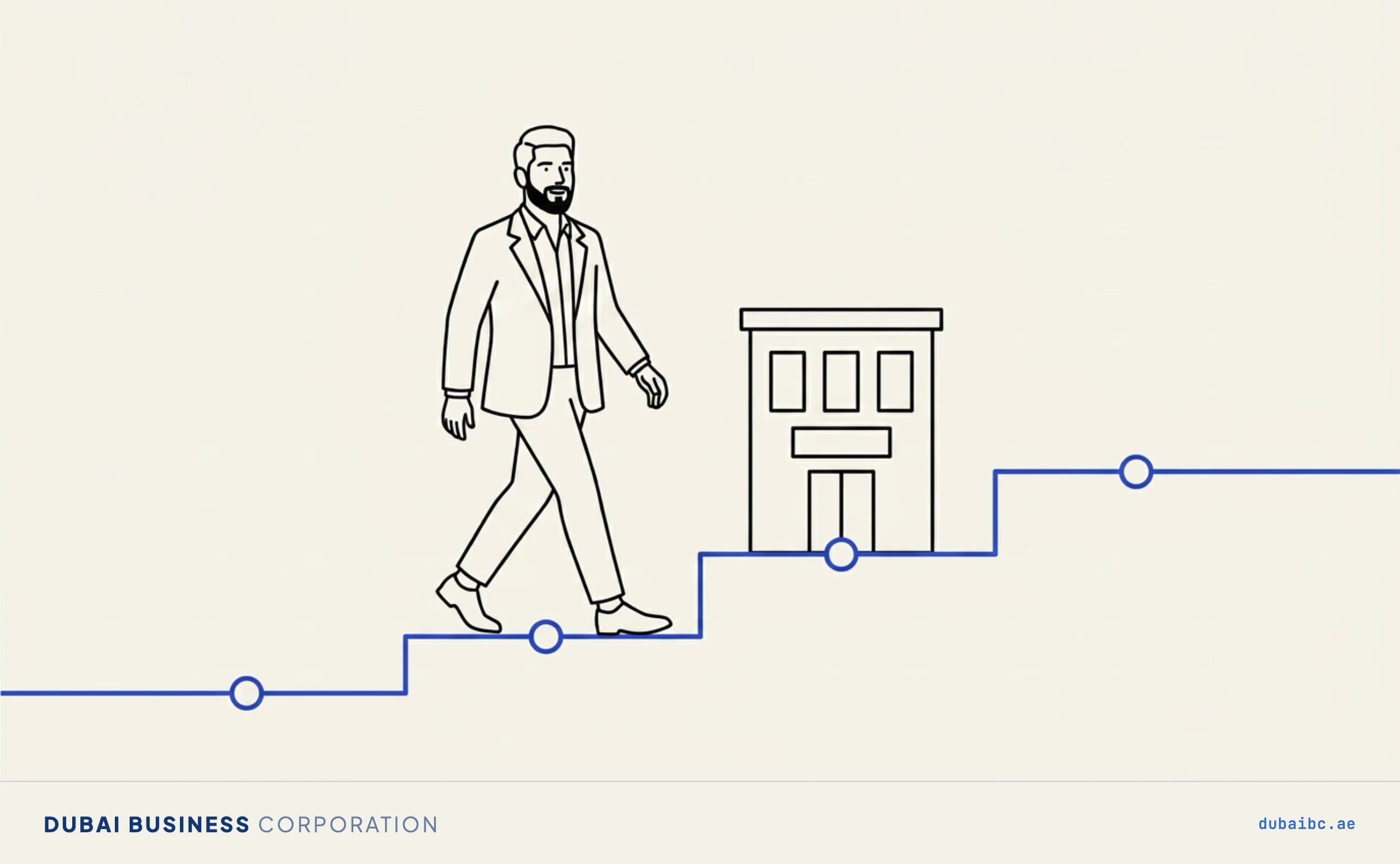
- Form or hold shares in a UAE company, mainland or free zone, with your name recorded as shareholder or partner on the trade licence.
- Apply for the establishment (immigration) card for the company if it does not already have one, a prerequisite for any visa sponsorship.
- Apply for the entry permit in your name as investor or partner.
- Enter the UAE or complete a status change if you are already inside the country on another status.
- Complete the medical fitness test and register for your Emirates ID.
- Receive the residence visa stamped against your investor or partner status, then sponsor family if eligible.
What It Costs
Cost depends heavily on the jurisdiction and package, since in many free zones the visa is bundled with the company formation cost rather than charged as a fully separate line.
On the mainland, the visa cost is usually separate from the licence but shares the same fee structure as an employment visa: entry permit, medical, Emirates ID and stamping.
Because this varies so much by structure, use the cost calculator to see the real number for your specific company plan rather than relying on a generic figure.
See the licence cost and the visa cost for your own company in one place, itemised from the real fee schedule.
Investor Visa Versus Golden Visa
It is easy to confuse the standard investor or partner visa with the 10-year Golden Visa investor route, but they are different tiers. The standard investor or partner visa follows simply from owning shares in an operating company and typically runs 2 to 3 years.
The Golden Visa investor route has a much higher bar, tied to a defined investment or business value threshold, and grants 10 years of residency with extra benefits such as longer allowed time abroad.
Most founders start on the standard investor visa and consider the Golden Visa once the business or investment reaches the qualifying scale.
Renewing an Investor Visa
Renewal generally follows the same cycle as the company licence renewal, since the visa is tied to the company remaining active and in good standing.
Each renewal repeats the medical test and Emirates ID cycle, and any government or free zone fees due at that point.
If the company changes structure, for example a shareholder exits or share percentages change, the visa eligibility should be reviewed, since it is tied to the shareholder record on the licence, not to the person independently of the company.
A lapsed company licence, for example a renewal missed due to an unpaid fee or an outstanding compliance filing, puts every visa sponsored through that company at risk, including the founder own.
This is one of the less obvious reasons company renewals should never be treated as a low-priority task; the licence and the residency of everyone tied to it move together, not independently.
Sponsoring Family Through an Investor Visa
Once the investor visa is issued, the holder can generally sponsor a spouse, children and in some cases parents, under the same income and documentation conditions that apply to any UAE resident sponsor, covered fully in our guide on sponsoring family for a UAE residence visa.
For an investor visa specifically, the income check is typically assessed against declared company revenue or the shareholder own compensation, rather than a payslip from an outside employer, so keeping clean company financial records matters for this step too.

What Happens if You Sell Your Shares or Exit the Company
Because the visa is sponsored by the company through your shareholding, selling your stake or exiting the business generally means the investor visa needs to be reassessed or cancelled and replaced with another route, such as an employment visa if you take a role elsewhere, or a new investor visa if you found or join another company.
This is worth planning for during any exit negotiation, not after the shares have already changed hands.
See our guide on cancelling a UAE residence visa the right way for how a clean exit works.
A practical detail that catches founders out: if the buyer of the shares is themselves a foreign individual who intends to take over the investor visa, the incoming shareholder still needs to go through their own full application, entry permit or status change, medical test and Emirates ID, from scratch.
Ownership does not transfer a visa automatically along with the shares; residency is always tied to the person, applied for individually, even when the underlying company and its licence stay exactly the same.
Investor Visa Versus Employment Visa for the Same Founder
Some founders, particularly in the early days of a company, end up on an employment visa sponsored by their own company rather than an investor visa, often because it was set up that way by a formation agent without much thought.
This is technically possible in some structures but usually the wrong fit: it treats the founder as an employee of their own business rather than an owner, which can complicate things like dividend treatment, end-of-service calculations, and the clarity of who actually controls the company sponsorship going forward.
If you are a genuine shareholder, the investor or partner visa is almost always the cleaner and more accurate route.
Common Mistakes With Investor and Partner Visas
- Assuming any shareholding automatically qualifies. Free zones set their own share value or structure conditions; confirm yours before assuming eligibility.
- Forgetting the establishment card. Without it, the company cannot sponsor any visa, including the founder own.
- Not planning the visa around an exit. Selling shares changes visa status; build this into any sale timeline.
- Confusing this with the Golden Visa. They have different thresholds, different validity periods and different benefits.
- Setting up as an employee of your own company by default. If you genuinely hold shares, the investor route is usually the more accurate and more flexible fit.
If you are not sure which fits, our employment visa guide and our comparison of the Golden Visa versus Green Visa help place the investor visa within the fuller landscape of UAE residence options.
Our services page covers how we structure combined company formation and investor visa packages so both are priced and processed together from the outset, and our guide on realistic visa timelines shows how the investor route compares in speed against employment and family sponsorship.
Frequently asked questions
An employment visa is sponsored by an employer and requires no ownership in the business. An investor or partner visa is self-sponsored through a company you own shares in, with no separate employer involved.
It varies by free zone and by mainland structure. Some free zones set a minimum declared share capital, others bundle visa eligibility into the licence package itself. Check the specific rules of the jurisdiction you are incorporating in rather than assuming a single UAE-wide figure.
Typically 2 to 3 years, tied to the company licence cycle, though some free zones offer longer terms. This is separate from the 10-year Golden Visa investor route, which has a much higher qualifying threshold.
Yes, provided you meet the standard salary or income threshold and documentation requirements that apply to any UAE resident sponsor. See our guide on sponsoring family for the full eligibility and document list.
Since the visa is tied to your shareholding, selling your stake generally means the visa needs to be reassessed or replaced with a different route. Plan this into any exit or sale timeline rather than dealing with it afterward.
See the number for your setup
The cost calculator runs on Dubai Business Corporation’s real price book. Answer a few questions and get your total, fully itemised, in under a minute.