Business Credit Score in the UAE: What It Is, How It Works, and How to Improve It
 Ali Jasim
A business credit score in the UAE measures how reliably your company meets its financial obligations. The Al Etihad Credit Bureau (AECB) is the national credit reference agency that tracks this history for businesses with UAE banking and credit products. Banks use your credit profile when deciding whether to open accounts, extend overdrafts, or offer financing.
Building a strong profile means consistent banking activity, clean compliance records, a documented source of funds, and a licensed activity that matches what your business actually does.
Most business owners in the UAE think about credit scores only when they need a loan. By then, it is often too late to fix the gaps.
A business credit profile is built over time, from the structure you set up at incorporation, the bank you choose, the way you run your account day to day, and the compliance filings you keep current.
Understanding how lenders read that profile, and what actually goes into it, gives you a clear map for where to start and what to prioritise.
What a Business Credit Score Actually Is
A business credit score is a rating that reflects how reliably your company meets its financial commitments.
In the UAE, this sits under the broader concept of business creditworthiness, which covers payment behaviour, banking track record, compliance standing, and the overall clarity of your company's financial picture.
It is not a single number computed identically by every institution. Different banks and lenders apply their own assessment criteria, and they pull from multiple data points rather than one central figure.

The clearest way to understand it is through what banks actually check when you apply for a business account or a credit facility.
They want to know whether your company is financially responsible, whether it operates within a documented and regulated framework, and whether the money flowing through it can be clearly explained.
A business that cannot answer those questions cleanly will find doors closing before any formal credit score is ever discussed.
This matters for every stage of your company's growth. A new company needs a bank account before it can trade.
A growing company needs trade finance or an overdraft to manage working capital. An established company applying for a larger credit facility is assessed on the full picture of how it has operated for years.
Building that picture correctly from the start is the single best investment a business owner can make in their long-term access to financing.
The Al Etihad Credit Bureau and What It Holds on Your Business
The Al Etihad Credit Bureau (AECB) is the UAE's national credit reference agency. It holds credit history for individuals and businesses that have used credit products with licensed UAE banks and financial institutions.
For businesses, this covers loans, overdrafts, credit facilities, and similar products issued by regulated lenders. You can find official guidance on how the AECB operates and what it covers at u.ae, the UAE government's central portal.

If your company has never held a bank loan, an overdraft, or a formal credit facility with a UAE bank, your AECB credit file will be thin or empty.
That is not automatically a problem in the early months of a new company, but it becomes a genuine obstacle the moment you need financing.
A lender looking at an empty report cannot distinguish between a business that is debt-free by choice and one that has simply never been considered creditworthy enough to receive credit. Building a trackable financial footprint matters more than most company owners realise.
The practical implication is straightforward. You cannot apply for financing and expect a bureau report to support you if you have never used formal credit products in the UAE.
The AECB report reflects history, not potential. What you build over the next twelve to twenty-four months of responsible banking and credit use is exactly what a lender will review when you come to them for a meaningful facility.
Start the clock as early as possible.
Why Creditworthiness Affects More Than Just Loans
Most business owners think about their credit standing only when they want to borrow. In the UAE, the practical effect is broader.
Banks consider your company's creditworthiness when deciding whether to open an account, what type of account to offer, what facilities to attach to it, and on what terms. A company with a strong and documented financial history gets faster approvals and better options.
A company with gaps, inconsistencies, or unresolved compliance questions will find the process longer, more conditional, and sometimes unsuccessful.

Suppliers, landlords, and large corporate clients also sometimes conduct informal creditworthiness assessments before entering significant commercial relationships. A company that banks know well, pays on time, and keeps clean financial records is simply easier to work with at every level.
The credit profile you build today is the foundation for every commercial relationship you will try to build over the next three to five years.
There is also a reputational dimension to this that goes beyond any formal score. A business that has been rejected by multiple UAE banks, or that has had accounts closed for compliance reasons, carries an informal reputation inside the banking sector.
Getting this right the first time is far easier than repairing a damaged standing. Preparation is the most cost-effective strategy available to any UAE business owner.
What UAE Banks Actually Check When Assessing Your Business
When a UAE bank reviews a business account application or a financing request, the checklist goes beyond a credit bureau report.
The standard documents include your trade licence, memorandum of association or incorporation documents, shareholder passports and Emirates IDs, proof of address, and a business plan or profile that explains the source of funds and expected activity.
The bank then runs compliance and KYC checks across all of that material before any credit assessment begins.
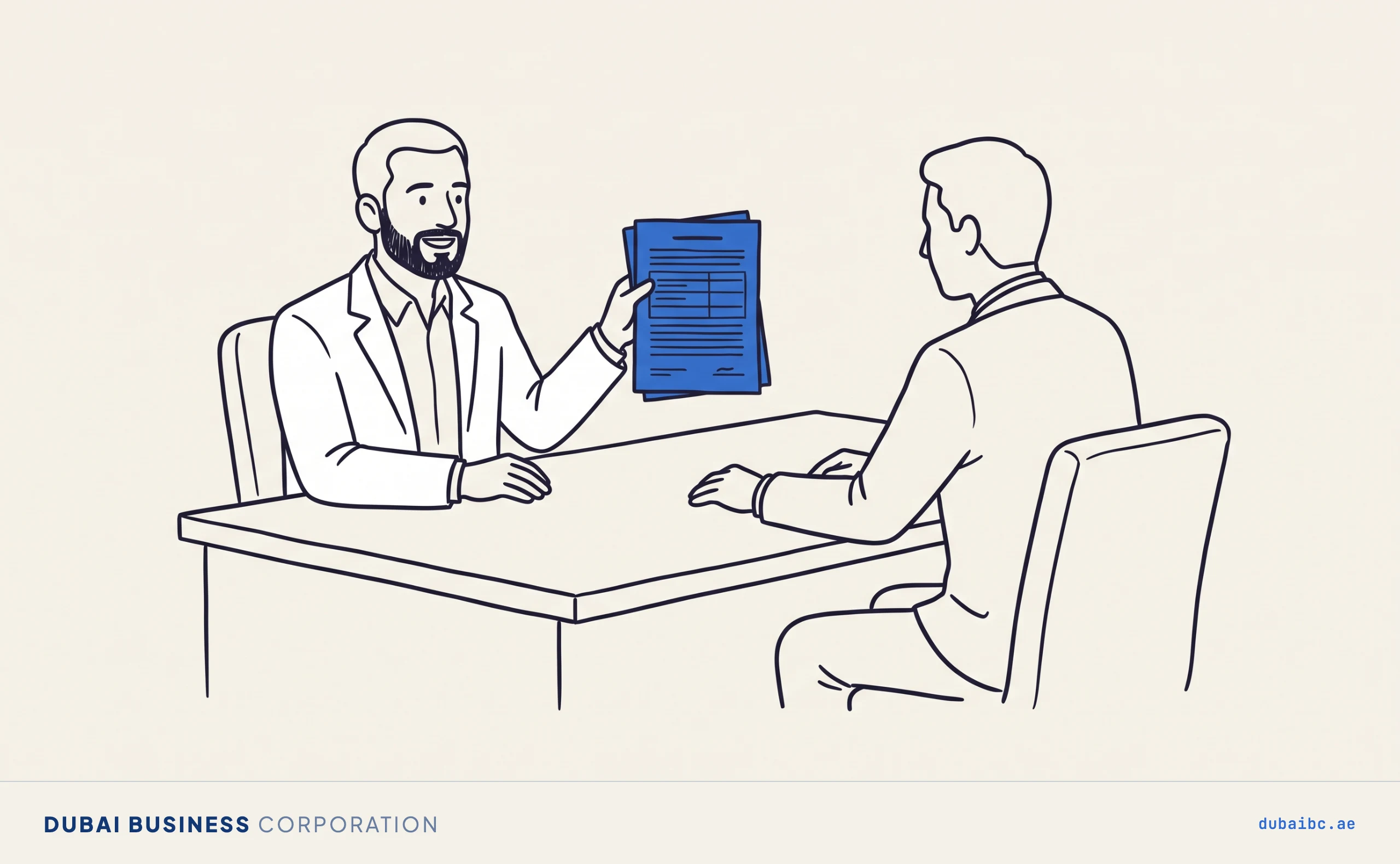
The business plan or company profile deserves far more attention than most applicants give it. Banks are not looking for a pitch deck or a vision statement.
They want to understand what your company actually does, where the money comes from, and whether it matches the licensed activity on your trade licence.
A generic profile, one that could describe any business in any sector, is one of the leading reasons applications are rejected before any credit assessment begins at all.
Prepare this document as if you are explaining your business to a careful financial regulator, because that is effectively what a bank's compliance team is. Specificity is the point.
Who are your clients, how do they pay you, what is the typical transaction size, and what does your business plan for the next twelve months look like in terms of revenue and activity.
A bank that can picture your business clearly is a bank that can make a decision.
Why Banks Reject Applications and What It Means for Your Credit Standing
The reasons UAE banks turn down business account applications and financing requests overlap significantly. A thin or generic business profile is at the top of the list.
So is a mismatch between the activity on your trade licence and what the account will actually be used for. If your licence describes trading in goods but your transactions look like professional service fees, a compliance officer will flag it.
That kind of mismatch damages your credit standing even if your payment history is otherwise clean.
Other common issues include shareholders resident in jurisdictions a bank considers higher risk, no clear evidence of the source of funds, and an incomplete application file. Almost all of these problems are fixable before you submit, which is why preparation matters far more than persistence.
Resubmitting the same weak file to a different bank rarely produces a different result. The work happens before the application goes in, not after a rejection has been recorded.
- Thin business profile. A generic description that does not explain what the company actually does, who it serves, or where its revenue comes from.
- Activity mismatch. A licensed activity that does not align with what the account will actually be used for, which triggers a compliance flag during KYC review.
- Undocumented source of funds. No clear paper trail showing where the money entering the account originates.
- High-risk shareholder jurisdictions. Shareholders resident in countries that banks consider elevated risk under anti-money laundering frameworks.
- Incomplete file. Missing documents that a bank requires to complete its KYC process, causing the application to stall or be declined outright.
How Your Day-to-Day Banking Behaviour Builds the Picture
Your credit profile is not built only through formal loans. The way your business operates its current account matters.
Consistent transaction volumes that match your stated activity, regular and explainable inflows and outflows, and accounts kept in good standing all contribute to the picture a bank builds of your company over time.
A business that keeps its account tidy and its activity well-documented is far easier to extend credit to when the right moment comes.
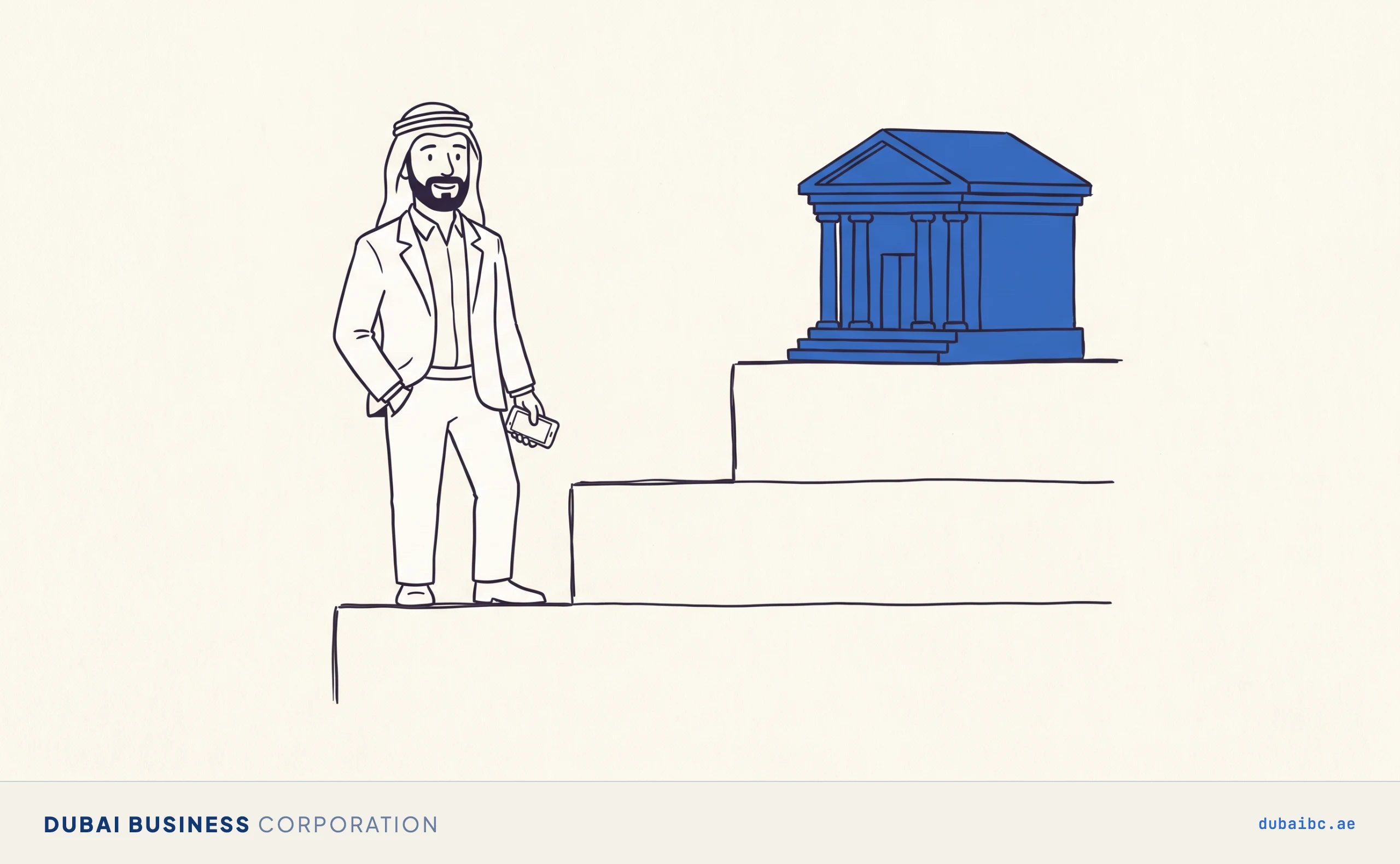
Digital business banking has changed the accessible entry point for this process. As the digital business banking guide sets out, digital-first providers have made it easier for early-stage businesses to open a working account quickly and with lighter minimum balance requirements than many traditional accounts.
That initial track record is a useful starting point. The limitation is that digital accounts are generally weaker for trade finance, large credit facilities, and complex multi-currency arrangements, which is where a traditional bank relationship becomes necessary.
Getting onto the banking grid matters, but so does choosing the right type of account for where your business is heading.
A business that opens a digital account for operational speed in year one and then transitions to a relationship with a traditional bank as it grows is making a sensible sequencing decision.
The two are not mutually exclusive and can serve different purposes at different stages of your company's development.
Compliance Records and Their Role in Your Creditworthiness
A clean compliance record is not separate from your credit profile. It feeds directly into it.
Banks in the UAE operate under the same anti-money laundering framework that applies to businesses in defined sectors.
That means the same customer due diligence, source of funds documentation, and transaction monitoring that your company should maintain is also what a bank's compliance team reviews when assessing your application.
A company with a documented, well-maintained compliance posture is one a bank is comfortable extending facilities to.
For businesses that carry out Relevant Activities under UAE Economic Substance Regulations, filing the required notifications and reports on time feeds into this same picture.
A company that is late with regulatory filings, or that has not registered on the goAML platform when required to do so, creates a compliance trail that surfaces during banking reviews.
Staying current with all UAE regulatory obligations is not only a legal matter. It is part of building and protecting your company's creditworthiness over time.
The AML compliance guide covers the specific obligations for UAE businesses in detail, including who qualifies as a Designated Non-Financial Business and Profession and what registration, due diligence, and reporting steps are required.
If your business falls into one of those categories and is not yet compliant, that gap will show up in a banking review.
It is one of the more straightforward problems to fix before it becomes a barrier.
The cost calculator uses Dubai Business Corporation’s real price book. Answer a few questions and see your total, itemised, in under a minute.
Corporate Tax and VAT Filing as Signals to Lenders
The UAE introduced corporate tax at 9% on profits above AED 375,000, with 0% applying below that threshold. Small Business Relief covers revenue up to AED 3 million through the end of 2026.
Whether or not your business currently falls into the taxable band, maintaining accurate financial records and filing on time with the Federal Tax Authority strengthens your standing as a creditworthy operation.
Lenders want to see companies managed with proper financial discipline, and tax compliance is one of the clearest signals of that discipline.
VAT compliance carries the same weight. If your business is registered for VAT, as required at AED 375,000 of taxable supplies or voluntarily at AED 187,500, your regular returns create a documented financial history that a lender can reference.
A business that has been filing returns consistently, with figures that make sense against its other financial activity, is a more credible borrowing candidate than one whose records are patchy or inconsistent.
Financial credibility is built through the regular small acts of compliance, not through a last-minute clean-up before a loan application arrives.
Companies that have missed VAT filings, have unresolved tax positions, or cannot produce clean management accounts on request will find that these gaps matter to a lender even if the underlying business is perfectly healthy.
Keep your records current from the start. The administrative effort is small.
The benefit to your credit standing is significant.
Building a Strong Credit Profile From the Day You Set Up
The businesses that find financing easiest to access are almost never the ones that started thinking about credit when they needed it.
They are the ones that set up a clean structure, opened an account with a bank suited to their profile, maintained consistent financial records, and filed every regulatory obligation on time from day one.
Building a credit profile is not a one-time action. It is the cumulative result of how your business runs, month after month.
Practically, this means a few things. Choose a bank that genuinely serves your business type rather than the one with the most familiar name or the lowest opening balance.
Keep your licensed activity and your actual transactions aligned from the start. Document the source of every significant inflow.
Maintain a real relationship with your bank rather than treating the account as a utility. Banks extend credit to businesses they know well and understand.
A company that has been a responsible account holder for two or three years is in a completely different position from one applying for a facility with six months of history. Both companies may be equally well-run.
Only one has the evidence to prove it to a lender. The earlier you start building that evidence, the more options you will have when you genuinely need them.
What to Do if Your Company Has a Thin Credit File
A thin credit file is common for newly formed UAE companies and is not a permanent obstacle. The key is to start building it deliberately rather than waiting until you need financing.
Opening a business account with the right bank is the first step. The guide to business bank accounts in the UAE covers how to match your company's profile to the right banking partner.
Keeping that account active, with transaction volumes that reflect your actual business activity, is what begins to build the history that matters.
A dormant account with minimal activity tells a bank very little and earns you nothing toward a future facility.
If your company qualifies for a small credit facility, even one you do not strictly need immediately, taking it and servicing it perfectly is one of the more reliable ways to establish a formal UAE credit track record.
Every obligation you meet on time, every year your company files its accounts cleanly, and every compliance deadline you hit adds to the picture a lender will eventually see.
There is no shortcut, but there is a clear path. The earlier you start, the more options you will have.
And the options available to a business with three years of clean banking and compliance history are substantially better, on terms, on speed, and on volume, than those available to a business with six months.
Time invested in a thin file early pays back with interest when real financing is needed.
What a Strong Business Profile Looks Like to a UAE Lender
A business that a UAE bank is comfortable extending credit to shares a recognisable set of characteristics. The licensed activity matches what the account is actually used for.
The shareholders are clearly identified, with no flags in the jurisdictions they come from. The business has a documented history of income and expenditure that makes sense against its stated activity.
Its compliance filings are current. And the person managing the company can explain its finances clearly and specifically when asked.
None of these are unusual requirements. They are the basics of a well-run business.
Companies that struggle with credit access are usually not in that position because they have done something wrong.
They are there because they did not set up the right structure at the start, did not prepare the right documents, or did not match themselves to the right banking partner early on.
Getting the foundation right is far easier before the first application than after a rejection has been recorded.
The difference between a business that gets credit approved on the first application and one that does not is almost always preparation and structure, not the underlying quality of the business itself.
Two companies of similar size, similar revenue, and similar activity can get entirely different outcomes from the same bank, depending entirely on how well the file was put together and how well the company's banking history reflects what it claims to do.
| Factor | Helps your profile | Hurts your profile |
|---|---|---|
| Business profile | Specific, detailed, matches the licensed activity | Generic, thin, or mismatched to the licence |
| Banking behaviour | Consistent, documented, active account | Dormant account or unexplained transactions |
| Compliance filings | AML, ESR, VAT, and corporate tax all current | Late or missing regulatory filings |
| Shareholder profile | Clearly identified, lower-risk jurisdictions | Shareholders flagged under AML checks |
| Source of funds | Clearly documented paper trail | Unclear, undocumented, or unexplained inflows |
How to Prepare Before Applying for Credit or Financing
Before approaching a bank for a loan, an overdraft, or a credit facility, run a preparation audit on your own business. Check that your trade licence is current and that the activity description matches your actual operations.
Pull your banking statements for the last twelve months and review whether they tell a coherent story about your business. If there are transactions that look unusual or unexplained, document them before a compliance officer asks.
Then prepare a clear, specific business profile that describes what you do, who your clients are, and where your income originates.
If you have AML or ESR obligations, confirm they are filed and up to date. If you have a corporate tax obligation, ensure your records are clean and complete.
Then match yourself to the right bank for your profile rather than starting with the biggest name or the most prominent brand.
A bank that understands your industry and your company's structure is more likely to approve your application and offer terms that work for your business.
DBC's banking team handles exactly this: matching the company's profile to the right institution and preparing the file in the format banks expect. That preparation process is the single biggest determinant of outcome for most applications.
It is covered as part of the corporate bank accounts service, and for most clients it is the step that turns a probable rejection into an approval.
The Role of Your Initial Company Setup in Your Credit Future
The decisions made when you set up a UAE company have a long tail. The jurisdiction you choose, the activity you license, the ownership structure you register, and the bank you open with all shape the credit profile available to your business later.
A company set up cleanly, with the right structure for its actual activity, is easier to bank from day one and easier to extend credit to as it grows.
A company set up in the fastest or cheapest way, without aligning the structure to the business, often hits friction later that is expensive to unwind.
If you are still at the setup stage, this is the easiest moment to get it right.
The UAE company formation service covers the full process from jurisdiction selection to trade licence to bank account opening, including the preparation that makes banking approvals faster and financing access cleaner from the start.
For existing companies reviewing their credit position, the same team can assess what is in place and identify what needs to be strengthened before you approach a lender.
A company that was set up correctly from the start, with a clear structure, the right bank, and clean compliance from day one, will almost always have an easier path to financing than one that needs to be restructured or documented retroactively. The cost of getting this right at incorporation is small.
The cost of fixing it two years later, when you actually need a credit facility, is considerably higher.
When to Get Professional Help With Banking and Credit Access
Most businesses ask for help with banking after a rejection rather than before. That is understandable but costly.
A rejected application leaves a record, and repeated rejections at different institutions can make the next application harder.
The better time to involve a specialist is before you submit anything, when there is still room to strengthen the file, choose the right institution, and present your business in the strongest honest light possible.
DBC works with new and established businesses on both sides of this. For new companies, that means setting up the right structure and matching them to the right bank from the start.
For existing businesses, it means reviewing what is in place, identifying the gaps that are blocking credit access, and addressing them before a financing application goes in. The approach is the same either way: fix the problem first, then apply.
For a straightforward sense of what your setup, restructuring, or banking preparation might involve, the cost calculator is the right starting point.
For anything specific to your company's situation, including complex shareholder structures, compliance gaps, or a previous rejection you want to address, the team can walk through it directly and tell you honestly what the path looks like.
Frequently asked questions
The Al Etihad Credit Bureau (AECB) is the UAE's national credit reference agency. It holds credit history for both individuals and businesses that have held loans, overdrafts, or other credit products with licensed UAE banks and financial institutions. If your company has no UAE credit history, your business file will be thin or absent. Building a formal UAE banking and credit track record is the most reliable way to establish a useful AECB business profile. Official guidance on the AECB is available through the UAE government portal at u.ae.
Common reasons include a thin or generic business profile, an activity the bank considers higher risk, no clear documentation of the source of funds, shareholders resident in jurisdictions the bank avoids, or a mismatch between the licensed activity and what the account will actually be used for. Almost all of these problems are fixable before submission. The key is to prepare the file correctly and match the application to a bank that genuinely serves your business type, rather than resubmitting the same incomplete file to a different institution.
Yes, indirectly but meaningfully. Banks want to see companies that are properly managed and compliant with UAE law. Corporate tax is 9% on profits above AED 375,000 and 0% below that threshold. VAT is 5%, with mandatory registration at AED 375,000 in taxable supplies. If your business has obligations and is not filing, or if your financial records cannot support a review, that creates a compliance risk flag that a lender will notice. Filing on time with the Federal Tax Authority and keeping accurate accounts strengthens your overall creditworthiness profile.
There is no fixed timeline. It depends on how actively and consistently your business uses banking and credit products. A company that opens a suitable account, maintains regular documented transaction activity, and manages any credit facility on its agreed terms will build meaningful history faster than one with a dormant account and no formal credit products in place. The most important step is to start from the day of incorporation rather than waiting until financing is needed, because that track record cannot be created retrospectively.
A digital business bank account can get your company onto the banking grid faster and with lighter onboarding than many traditional accounts, and that initial history is a useful starting point. However, digital accounts are generally weaker for trade finance and larger credit facilities. For businesses that expect to need significant financing, the right strategy is often to open a digital account for early operational use and then build a relationship with a traditional bank as the business grows. The two serve different purposes and are not mutually exclusive.
See the number for your setup
The cost calculator runs on Dubai Business Corporation’s real price book. Answer a few questions and get your total, fully itemised, in under a minute.